
Staying Close to Grandparents When You Don't Share a Language
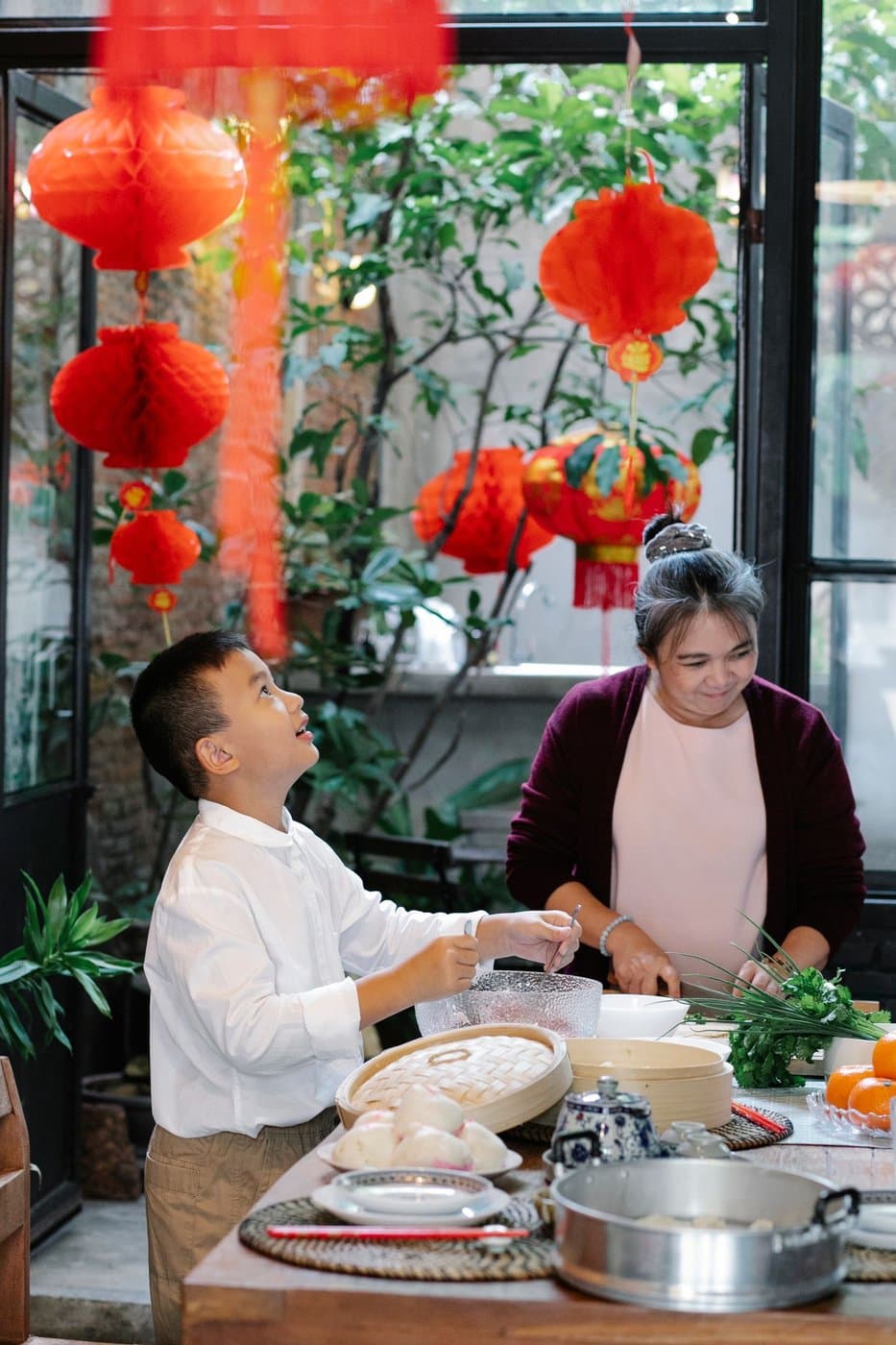
You may never debate politics with Po Po. You can still learn her dumpling fold and send her pictures of your dog until she smiles.
"How to connect with grandparents language barrier" and "bond with grandma without speaking same language" searches come from people who want presence, not perfection. This guide cites Chinese immigrant grandparent research from Los Angeles, names middle-generation translation without burning kids out, and offers low-pressure rituals that build memory before fluency catches up.
Leah Chen writes about mixed families, bilingual homes, and helping kids feel whole across more than one story.
Fluency is one door, not the only door
"Connect with grandparents no common language" searches come from people who still want the relationship, not a linguistics medal.
Elders often show love through feeding, fixing, praying, watching you eat, folding your clothes, slipping cash into your bag, sitting nearby while a drama plays with the volume too loud. That register is real connection even when you never discuss your job, your dating life, or the news.
Research on Chinese immigrant grandparents in Los Angeles found that language gaps were a central stress, and that many elders still worked to stay close by learning bits of English, softening expectations, or leaning on the parent generation to interpret. Similar patterns show up in other bilingual families: Spanish-speaking grandmothers and English-dominant grandchildren, Vietnamese elders and American-raised teens, Korean grandparents who understand more than they can speak back.
If we are being honest, waiting until you are "fluent enough to deserve love" is a trap. Fluency helps. Patterns of showing up help more on most Tuesdays. Our guide on grief when you could not talk to grandparents holds the ache. This guide is the build list: how to stay close with the vocabulary you have.
Rituals that work without long conversation
Pick two or three repeats, not a personality overhaul. Intensity impresses Instagram. Repeat builds recognition in an elder's week. The Los Angeles grandparent study and related caregiving research keep pointing back to daily or weekly activities as the place closeness actually lives.
| Ritual | Why it works | Starter move |
|---|---|---|
| Cooking one dish | Hands learn together when words stall | Film her folding dumplings; copy slowly next week |
| Photo swap | Visual story beats grammar homework | Send a weekly pet or kid photo with one caption |
| Voice notes | Tone carries warmth apps cannot fake | Record a ten-second hello; ask a parent to help reply |
| Shared shows | Parallel time counts as company | Watch a series she likes with subtitles on both sides |
| Physical help | Service is a love language in many families | Fix the phone, drive to appointments, set up video call |
| Holiday tasks | Belonging arrives through labor | Set the table, wash dishes, light incense together |
Ritual ideas synthesized for practice; closeness-through-activity themes align with Xu et al. (2018) on Chinese immigrant grandparent-grandchild relationships and qualitative grandparenting studies emphasizing daily caregiving and shared routines. Repeat beats intensity.
Technology without the ad fantasy
Translation apps, video calls, and AI-assisted message tools exploded into public view with campaigns like McDonald's 2024 Sweet Connections spots, which showed grandchildren recording English messages translated into elders' languages. The ads were moving. Real family life is messier.
Tools can help with essentials: visit plans, appointment times, "I love you," a photo of the soup you made. They also glitch, sound robotic, flatten jokes, and occasionally invent a word that makes Grandma frown. Use them as bridges, not as proof you have solved belonging.
Do not treat a viral commercial as evidence you failed if your grandparent prefers face-to-face fruit cutting to a lip-synced AI greeting. Many elders want your body in the kitchen more than a perfect translated paragraph.
Set elders up simply: large text, one video app, saved contacts with faces, practice calls when nothing urgent is at stake. Our elder-care long-distance guide pairs when geography, not only vocabulary, stretches the bond.
A week of closeness when words are thin
If you freeze every time someone says "just call more," use a light weekly map. The point is predictability, which elders often read as care even when the call is short.
| Day | Low-word move | Optional upgrade |
|---|---|---|
| Sunday | Send two photos from the week | Add one voice note saying their name |
| Tuesday | Fifteen-minute video call, even if quiet | Cook the same snack on both ends of the call |
| Thursday | Ask a parent to translate one story about your life | Ask the elder one specific memory prompt |
| Saturday | Shared chore or errand if local | Record a recipe step for the family archive |
Sample cadence for families building new habits. Adjust for time zones, work schedules, and elder energy. Consistency matters more than perfect bilingual conversation.
Kids and the middle generation
If you are now the parent, you may watch your child and elder adore each other while sharing fewer words than you wish. That can feel like failure and miracle in the same afternoon.
Resist turning the child into a performing seal for relatives. Short greetings beat forced speeches. A toddler waving a dumpling is often enough. Ask bilingual relatives to tell elders what your child enjoys: soccer, drawing, a funny school story translated lightly, without turning the child into the family's unpaid interpreter for adult conflict.
Let elders teach through action: folding laundry, watering plants, card games with simple rules, sorting beans, walking to the same corner store. The Xu et al. work reminds us that middle-generation parents shape the bond as models and translators. Your calm narration ("Grandma is showing you how she rolls the dough") teaches kids that connection can look quiet.
Our grandparents guilt love-language guide helps when help arrives with strings. Our family-translator guide covers when kids get drafted into adult interpreting. Heritage weekend school can help if you want formal classes, but home rituals still count when tuition is not realistic.
When closeness still feels thin
Some relationships stay polite and distant despite effort. That hurts, especially if cousins seem fluent, favored, and constantly posted in matching holiday outfits.
Ask whether personality, old family conflict, birth-order favoritism, or gender bias also shape the bond. Language is a major variable. It is rarely the only one. An elder who was cold in the heritage language will not automatically become warm because you downloaded a better app.
You can grieve the fantasy grandparent (long talks, secret history, easy jokes) while still honoring the real one (fruit cut the way you like, a jacket on your chair, a silent car ride that somehow feels like company). Therapy helps when childhood visits still define your self-worth, or when every holiday reopens the same hollow feeling.
Stopping effort is allowed if elders are cruel or unsafe. A language gap is not an excuse for insults, control, or harm. Presence is a gift you offer when the relationship can hold it, not a debt you pay into a void.
Recording and visiting without turning love into a project
If time feels short, recording with consent can deepen closeness even when conversation is limited. Film hands cooking. Save a voice note of a blessing. Photograph the altar, the garden, the bus pass holder that somehow holds three decades of receipts. Our guide on recording grandparents' stories walks through consent and trauma-aware pacing so you do not turn Grandma into content.
Visits work the same way. Arrive with one activity planned (market run, photo sorting, dumpling session) and one exit ramp ("I can stay ninety minutes"). Leave before exhaustion makes everyone sharp. Distance families can schedule calls the way they schedule rent: same day, same app, same short length, with photos in between so the relationship does not depend on perfect small talk.
Questions we hear
Connection experiments fail sometimes. That is data, not doom.
Do I need to learn the language to be a good grandchild? No. Learning can deepen a bond if you choose it and the elder receives your effort kindly. It is not a moral entrance exam.
What if my grandparent only criticizes my accent when I try? Protect the learner. Shift to action-based rituals until shame cools. Ask a parent to tell the elder that encouragement works better than exams.
Can food alone be enough? For some seasons, yes. Shared meals carry memory across generations when debate is unavailable.
Should I record elders now? Yes, with consent, and with respect for silence around trauma. Voice and video archives become family treasure even when vocabulary stays thin.
What if they live abroad? Scheduled calls, photo streams, and predictable visits beat random guilt bursts. Put the call on a calendar both households can trust.
The walkaway: stop waiting for fluency to authorize love. Pick two rituals, keep them boringly regular, use tools without worshipping them, and let closeness look like dumpling flour on your sleeves.