
When Grandparents Clearly Favor One Grandchild
Your child sees who gets the bigger red envelope, the softer voice, the longer hug. Favoritism is not imagination. It is a pattern you may need to name out loud.
Grandparent love is rarely perfectly equal. When the gap becomes obvious (comments about skin tone, gender, or which cousin is "the smart one"), children absorb it fast. This guide cites within-family favoritism research, then helps you intervene with elders and repair with your kids.
Mina Han writes about family life, school years, and the emotional weather of raising kids between cultures.
What kids notice before you explain it
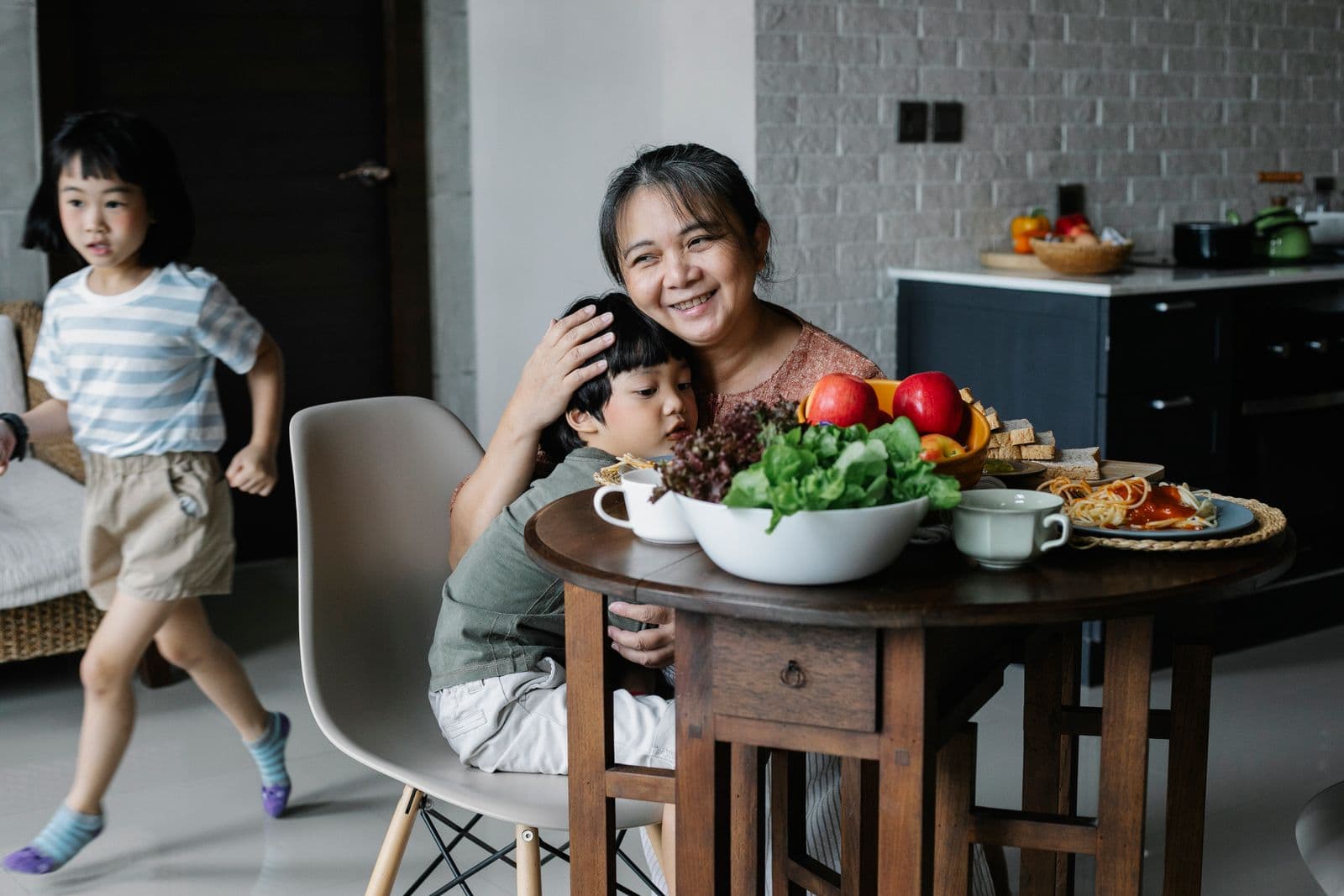
They hear who gets praised for eating more, who is called pretty versus "needs to slim down," who sits closer in photos, who receives the larger gift envelope. Siblings compare too, even quietly. Mixed-race kids may watch one grandparent glow at the lighter cousin. Daughters may see brothers excused for behavior they are punished for. The child who struggles in school may feel invisible next to the cousin headed for medical school.
You may have grown up inside the same hierarchy and hoped it would not repeat. It often repeats unless someone interrupts it. If we are being honest, kids rarely need a speech to detect the ranking. They need adults who will say the ranking is wrong and then act like it.
Why uneven warmth is more than "just how elders are"
Family researchers who study within-family differences keep finding that people notice who is closer, who is in conflict, and who is treated as the disappointment. In later-life families, those perceptions show up among adult grandchildren too: most respondents in one Within-Family Differences Study wave said their grandmother was closest to particular grandchildren, not equally close to everyone.
That matters for young kids as well as adult cousins. Social comparison does not wait for a PhD. A child who watches a sibling get the soft voice and the bigger envelope is learning a story about their worth inside the family. Suitor and colleagues' work on maternal differential treatment also links perceived favoritism and disfavoritism with higher depressive symptoms among adult children, and finds that recalled childhood unevenness can still echo in midlife. You do not need to frighten your kids with journals. You do need to take the pattern seriously enough to interrupt it.
Why elders sometimes deny it
Grandparents may say they love everyone equally while acting differently. They may believe comparison motivates. They may not see colorism or gender bias as real harm, only as "truth" or teasing.
Immigrant elders sometimes express love through investment in the child they think will carry the family forward (the son, the lighter-skinned cousin, the high scorer). That logic hurts the child labeled backup plan. You do not need them to confess bias in a courtroom tone. You need them to change behavior around your children.
Scripts for gifts, compliments, and public comparisons
Intervene early, privately when you can, publicly when the comment lands in front of kids. Keep the ask behavioral. You are not putting Grandma on trial for her childhood values. You are setting the rules of contact with your children.
| What happens | What you can say | Follow-up if it repeats |
|---|---|---|
| Uneven red envelopes or gifts | "Please keep gifts the same amount, or we will equalize at home." | Redistribute privately; shorten gift exchanges |
| Boy praised, girl corrected | "Same rules for both kids. Please do not excuse him and scold her." | Partner leads next visit; leave early if needed |
| Colorism or "pretty" rankings | "We do not comment on skin or bodies. Stop." | Skip photo sessions; host on your turf |
| Cousin called "the smart one" | "Every child has strengths. No rankings at dinner." | Change seating; end the topic twice, then leave |
| Elders deny any difference | "I am telling you what the kids experience. Please adjust the behavior." | Reduce unsupervised time |
Scripts are starting points. Safety, disability access, and elder cognitive decline may change how direct you can be.
Protect the unfavored child first
Private time matters more than a perfect confrontation. "I saw what happened at dinner. You are not less loved here." Say it in the car, at bedtime, or while packing leftovers. Specific beats vague: "Grandma gave your cousin a bigger envelope. That was unfair. In our house you are not ranked."
Do not force the hurt child to perform gratitude for uneven gifts. You can thank elders for showing up while correcting privately: "The envelopes were different sizes. Please keep them equal going forward." If favoritism targets appearance, our guides on colorism and relatives' clumsy comments offer more language. Your child needs to hear that home rejects those rankings even if the banquet hall does not.
When the favored child starts to lord it over siblings
The golden child may repeat elder scripts: comments about weight, grades, or "acting white." Address it as behavior, not destiny. "Grandma's praise does not make you better than your sister." Siblings need shared house rules even when elders differ.
Avoid punishing the favored kid for being favored. Redirect entitlement gently. They are also being molded by a system that can harm them later, including pressure to stay the emotional favorite forever. Research on favored adult granddaughters has even linked "closest grandchild" status with higher depressive symptoms for some young women when that role becomes emotional caregiving. Favoritism is not a clean prize.
Partner alignment when favoritism follows bloodlines
Your in-laws may favor their biological grandchild over a stepchild, or the son's kids over the daughter's. Your partner must lead with their family. If your spouse minimizes ("That is just how they are"), your child learns the marriage will not protect them.
Have the couple conversation before the holiday, not in the parking lot after. Agree on three things: what counts as a breach, who speaks first, and what you will do if it happens again (leave early, host next time, skip one event). Mixed families especially need an explicit "our kids get equal treatment at gatherings" rule before the next reunion. Couples counseling belongs here when one partner keeps sacrificing the kids' dignity to keep elders comfortable.
Reduce exposure when change is slow
Some elders improve with clear feedback. Some double down. You may shorten visits, skip certain events, or host on your turf where you control seating and gifts. Equal does not mean identical (different ages need different things), but it does mean no public scoreboard.
Document patterns if you need clarity for yourself: dates, comments, gift gaps. Not every family can confront. Every family can prioritize the child's experience on the drive home. Our boundaries-with-grandparents guide pairs when you need the broader contact plan, not only the favoritism script.
When the pattern keeps repeating
Should I call it racism or sexism at the table? If safe, name it plainly once. If not, leave and debrief with kids away from the audience.
Do I refuse money that favors one child? You can redistribute privately or decline unequal gifts with a short explanation. Money that buys silence is expensive.
What if my child internalizes the ranking? Steady home messaging, affirming peers, and therapy when shame sticks help. It takes time. Recalled childhood favoritism research is one reason not to shrug this off as "kids being sensitive."
Is cutting contact ever justified? When harm is repeated and unacknowledged, shorter or supervised contact protects mental health. Loyalty that requires your child to absorb contempt is not loyalty worth keeping intact.