
The Doll Aisle Caught Up Before the Relatives Did
Joeydolls, founded by Samantha Ong, puts culturally specific Asian dolls into kids' hands.
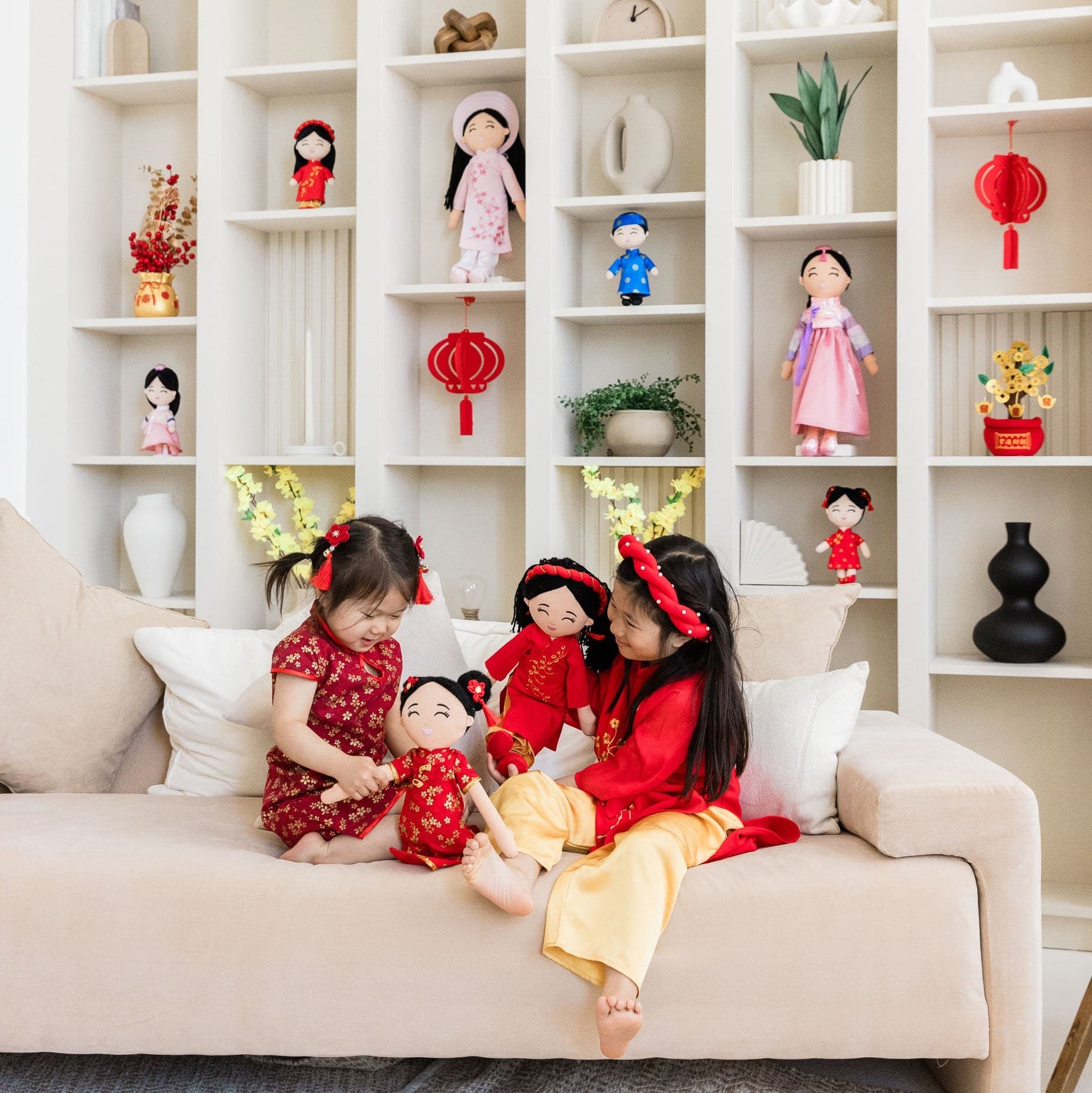
Before kids have language for race, they have language for toys. Who looks soft enough to hug. Who gets the princess dress. Who never appears on the shelf at all.
Joeydolls is a Canadian brand built for that early silence. Founder Samantha Ong, a mom of two who grew up in Australia without dolls that reflected her Asian culture, launched the line in 2023 after pandemic years made anti-Asian hate harder to ignore and culturally representative toys still hard to find for her daughters. The company is named for her daughter Joey. Its press kit is unusually clear about editorial use: lifestyle photos of kids playing with the dolls, product shots, and logos available for news and blog features with credit.
In January 2026, Ong pitched Joeydolls on CBC's Dragons' Den (Season 20, Episode 12), asking for $175,000 for 10%. CBC's pitch page lists Toronto as home base. Ong has written that the episode was filmed during tariff and customs chaos that scrambled forecasting, and that the Den mattered more as a representation stage than a funding close. Whether or not a Dragon writes a check, the public story is the same one mixed and diaspora parents already rehearse at bedtime: kids deserve play that does not make their faces feel like a special request.
Mixed and diaspora kids invent identities with whatever the toy aisle offers. Brands like Joeydolls finally offer culturally specific Asian dolls; parents still have to protect that mirror when relatives treat heritage as optional.
Why the toy aisle is a family-systems problem
Psychologists Kenneth and Mamie Clark's mid-century doll studies are most often cited for Black children's racial preference under segregation, and they remain a reminder that toys can carry status long before school does. Later classroom research on ethnic awareness in young children keeps finding that kids notice difference early, and that majority-group kids often prefer their own group more readily than minority kids do. You do not need to recreate a lab in your living room to feel the echo: a mixed Asian child who never sees a face like theirs in play learns a quiet ranking.
Joeydolls answers that ranking with specifics, not a generic "Asian" oval. Collections include culturally dressed dolls across communities, a Lil Joeydolls line, and a first boy doll announced in mid-2025 press materials. Awards and retail expansions (National Parenting Product Awards, Mom's Choice Gold, North American shelves) matter less than the household scene their lifestyle photography sells: sisters in red festival outfits, dolls that match the holiday clothes, shelves that look like a small Asia without apology.
Scripts for mixed households and clumsy relatives
If your family is mixed, the doll can be a bridge instead of a loyalty test. Let your child choose which culture's outfit to play with this week. Pair the toy with one story, song, or snack from that side. When a relative says "why does she need a special doll," try: "She needs the same thing every kid needs: to see herself as normal."
If grandparents gift only blonde dolls, accept the love and still buy the mirror. You are not rejecting their gift. You are filling a gap the market left for decades. Our guides on clumsy relative comments and raising kids close to a culture you are still reconnecting with pair well here: play is practice, not a purity quiz.
And if your child is not Asian but loves a Joeydoll because a friend looks like that doll, that is also the point. Representation is not only for the kids who match. It is for the kids who learn whose stories count.
Buy the doll. Do not outsource the conversation.
A culturally specific toy is a start, not a curriculum. Talk about hair, names, holidays, and why some stores still stock one face. Watch for colorism in your own family comments about "fair" skin or "better" features. If anti-Asian jokes show up at school, treat the doll as comfort and the adult response as the real work.
Ong's Dragons' Den moment made national Canadian television notice a toy aisle problem diaspora parents already knew. Your job is smaller and harder: make the living room match the values you want your kid to believe at seven.