
The $20,000 Childhood: Which Extracurriculars Are Actually Worth It?
Tutoring, music, club sports, language school, and test prep stack fast in ambitious Asian American households. Research on enrichment spending, plus a practical framework for what to keep, add, or quit.
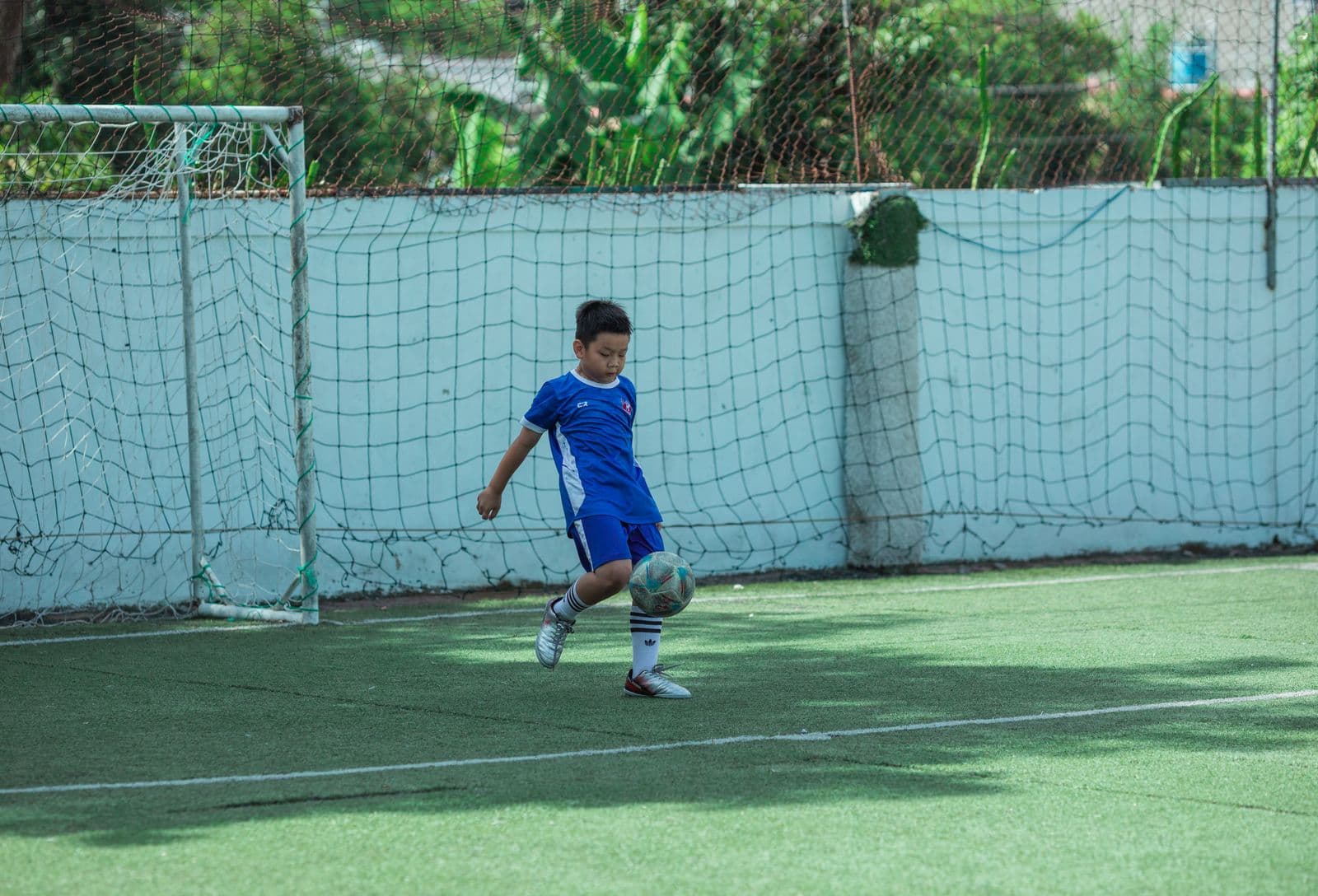
Saturday is no longer a free day. It is a logistics map: drop-off at 9, lesson at 11, tutoring after lunch, language school before dinner, and a quiet guilt spiral about the one activity you skipped.
In many ambitious Asian American households, that calendar is not one hobby. It is a portfolio.
Tutoring. Music. Club or travel sports. Heritage language. Test prep. Enrichment that arrives as “just one more thing,” then becomes the family operating system.
Call the high end of that stack a $20,000 childhood. Not because every family hits that number, and not because that is a national average.
Because once you add private lessons, a competitive team, two academic supplements, and a language program in an expensive metro, five figures stops sounding theatrical.
The useful question is not whether enrichment is bad. Moderate activities are linked with belonging, skill, and better mental-health odds for many kids.
The useful question is which dollars buy durable growth, and which dollars mainly buy a résumé line and a tired child.
What the research actually says about the spend
Sociologist Ziyao Tian’s analysis of Consumer Expenditure Survey data (2009–2022) finds Asian American households outspend White households on K–12 education overall, especially tutoring and recreational lessons, while White households spend more on sports and cultural activities. The tutoring gap is largest among graduate-educated parents. Separately, Aspen Institute Project Play’s 2024 parent survey put average primary-sport spend at about $1,016 a year (up 46% since 2019), with some families reporting nearly $25,000. Music lessons often run roughly $1,400 to $2,400 a year for weekly half-hours; Kumon-style programs commonly cost $150 to $200 per subject per month. Stack a few of those and the $20,000 childhood stops being a metaphor.
Ambitious Asian American households often treat enrichment as love and insurance at once. Distinguishing skill-building from résumé padding protects kids’ energy and parents’ money without rejecting education as a value.
Why Asian families keep paying, even when money is tight
This is not only “tiger parenting” folklore.
Jennifer Lee and Min Zhou’s work on the Asian American achievement paradox shows how hyper-selective immigration helped build ethnic capital: tutoring centers, test-prep knowledge, and a shared success frame that reaches working-class coethnics through churches, temples, and community programs, not only through rich parents.
IZA and related research on private tutoring centers finds the same geographic pattern. Centers concentrate in high-income, high-education areas, and still cluster where Asian American families are numerous even after income and parent education are held constant.
So the pressure is structural and social. Cousins compare schedules. Group chats share coach names.
A parent who pauses looks like they are falling behind, even when their child is exhausted.
Skill-building versus résumé-building
Skill-building has a feedback loop you can feel. Your child gets better. They want another try. They can explain what they are learning.
The adult in charge cares about practice quality, not only trophies.
Résumé-building has a different loop. The activity exists because someone else’s kid has it. Progress is hard to name. Quitting feels like risking college, even in third grade.
High-quality tutoring can be real skill-building. A 2023 Review of Educational Research meta-analysis by Nickow, Oreopoulos, and Quan found tutoring programs produce substantial learning gains on average (about 0.29 SD in that pooled estimate).
Effects were stronger when tutors are teachers or paraprofessionals, sessions happen often, and work happens during school hours. That is problem-solving tutoring.
Perpetual “keep ahead of the class” tutoring is different. If the original gap closed months ago and the only goal is ranking anxiety, you may be buying dependence: a child who cannot start homework without a paid adult in the chair.
Age, specialization, and signs the calendar is winning
The American Academy of Pediatrics advises delaying single-sport specialization for most sports until late adolescence, around 15 or 16.
Sampling multiple sports earlier reduces overuse injuries, burnout, and the false urgency of year-round travel teams for elementary kids.
Overscheduling research is not “zero activities.” It is a threshold story. Benefits of structured activities often show up at moderate intensity and can level off when hours get very high.
One study of high-achieving adolescents found social and mental-health gains leveling around five to seven hours a week of participation.
Watch for body and mood signals. Headaches before lessons. Dreading the car. No unstructured play for weeks.
A child who used to love piano and now only asks whether they can quit without disappointing you.
Challenged looks like stretch plus recovery. Overscheduled looks like stretch without a landing.
A keep, add, or quit framework (and how to quit without teaching quitting)
Once a season, put every activity on one page with annual cost, weekly hours, and a one-line purpose. Then ask four questions.
Does my child still choose this when no adult is watching?
Does a trusted teacher or coach see real growth, not only attendance?
Is this solving a named problem (reading gap, joy, friendship, language with grandparents), or only protecting status?
If we cut this tomorrow, what concrete skill or relationship disappears?
Keep activities that clear at least three of those tests. Add only when something leaves first.
Quit when the purpose is gone, the cost is crowding out sleep, or the child has been asking for months and you have been answering with college math.
When you quit, narrate it as discernment, not failure. “We tried this for a year. You learned X. We are making room for Y.”
Finish the season if that is fair to teammates. Celebrate the skill kept, not only the activity ended.
Children do not learn grit from never stopping. They learn it from choosing hard things on purpose, and from watching adults revise a plan without shame.
Pair this with our guides on childhood-resume anxiety and the tutoring spiral when the family chat still treats every blank Saturday as a risk.