
The Asian Dad Learning to Be Emotionally Present
Presence is more than being in the room. It is letting your child feel known. That can be new territory for dads who grew up with silence as love, but it is learnable one minute at a time. The hard part is making sure this becomes a durable part of the family culture, not just a one-month or few-month improvement or exercise. Here is our advice.
While it might feel daunting, emotional presence does not require perfect words. It requires showing up with attention, repair, and consistency your child can trust over time, whether you are raising sons, daughters, or both in a high-expectation household where feelings were rarely named aloud. The good news is that research backs this up: a 2021 meta-analysis by Rodrigues and colleagues in Child Development found that paternal sensitivity is linked to children's emotion regulation, with a small-to-moderate effect size of about r = 0.22, and sensitivity is something fathers can build through practice rather than a personality you either have or lack.
Daniel Park writes about fatherhood, co-parenting, and what it looks like when dads show up with more than logistics.
The provider script many of us inherited
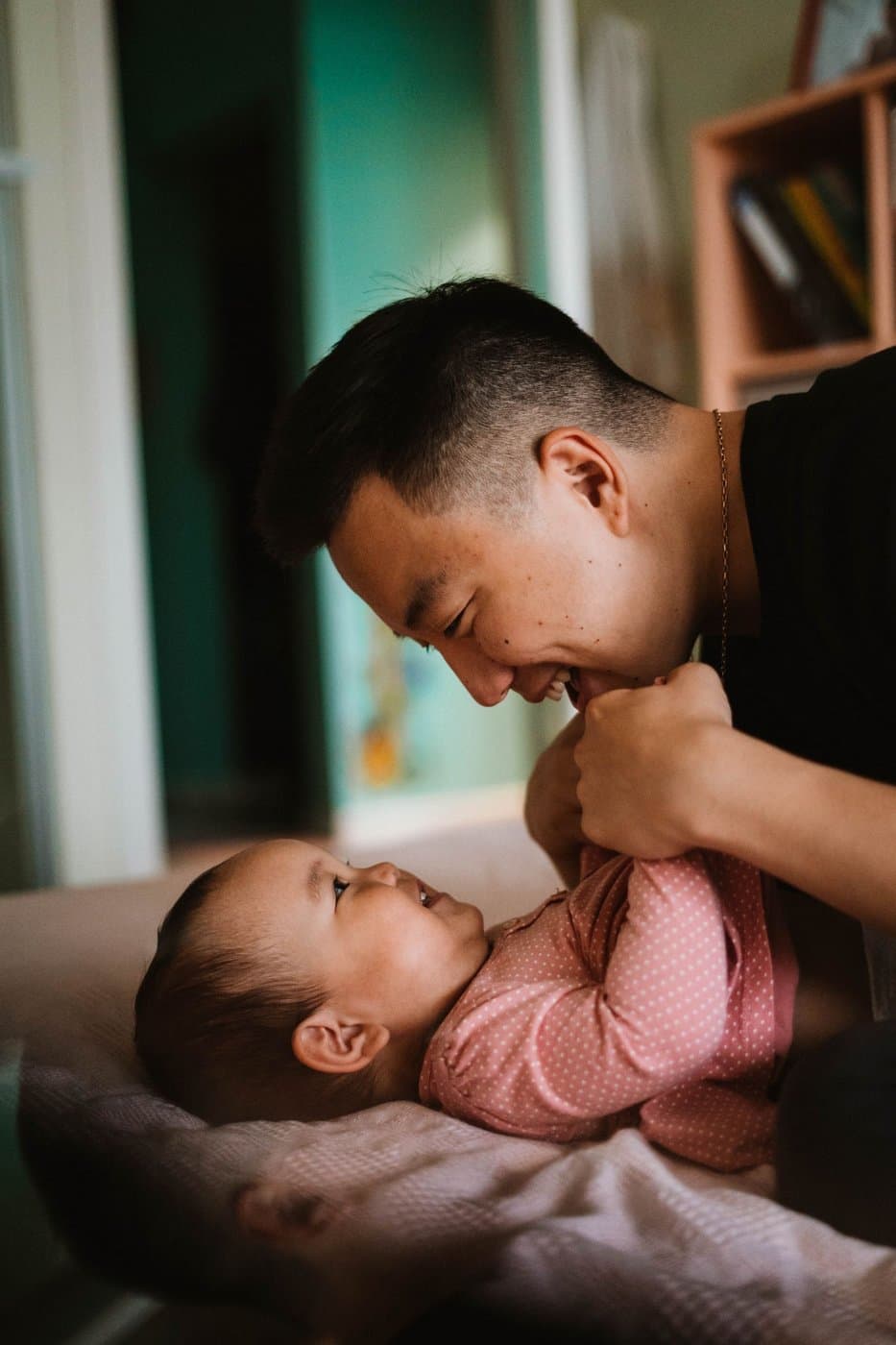
In many Korean, Chinese, Vietnamese, and Indian families, fathers were praised for stability: paying bills, fixing problems, staying calm, not complaining. Feelings were often handled elsewhere, by mothers, or not at all. You may love your children deeply and still feel awkward when they cry. You may reach for solutions when they wanted listening. You may think presence means sitting nearby while scrolling because that is what your father did. None of this makes you defective. It makes you trained. Emotional presence is learnable, like cooking or budgeting, even if nobody taught you explicitly.
But there is a danger to this. Not just for the children who may feel corralled into a role from the moment they are born, but for the mothers and wives in the family, who may need a friend as much as she needs a "man of the home," especially during what is inherently a lonely learning period in many ways. Chao and Tseng (2002) note that collectivist cultures often value emotional self-control as harmony, with feelings kept private. That can leave partners carrying emotional weight alone.
The Maternal Mental Health Alliance distinguishes perinatal emotional loneliness from social loneliness: a mother may be surrounded yet feel unseen. A Gynaecological Nursing study of 60 primiparous mothers found partner support education improved satisfaction. Your presence protects the household.
What emotional presence actually looks like
Presence is eye contact when they talk. It is putting the phone down for the first sixty seconds of a hard story. It is naming feelings without fixing them immediately. "That sounds frustrating" can be enough. It is also repair. "I was short earlier. That was not about you." Kids remember dads who come back after mistakes.
You do not need poetic speeches. You need repeatable signals that your child's inner life is welcome in your orbit. Li and colleagues (2019, Social Development) studied Chinese fathers in parent-child interaction and found that fathers who showed more expressivity during play and conversation created richer emotional exchanges, even within cultures where verbal warmth is not the default male script.
Research on paternal sensitivity and attachment security, summarized in meta-analytic work by Bakermans-Kranenburg and colleagues, reports a meaningful link between how responsive fathers are and how securely children attach, with an effect around r = 0.21. That is not destiny. It is direction. Small, steady responsiveness adds up across years.
When silence was love in your childhood
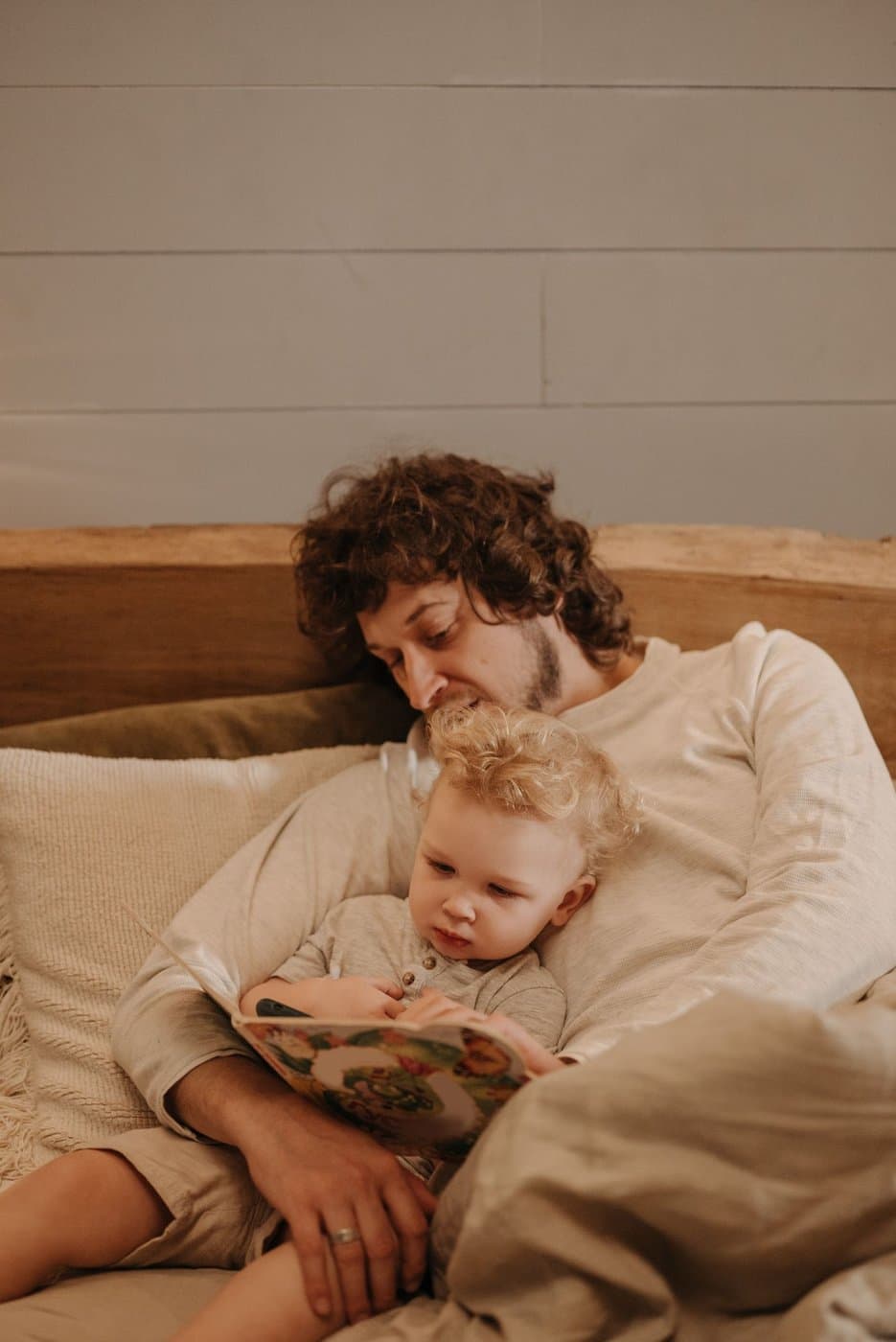
Some fathers showed love through acts: tuition paid, fruit cut, cars fixed, rides given at odd hours. If you only received silence, you may not have a template for verbal warmth. You might freeze when your child asks, "Do you love me?" because love in your house was never spelled out loud.
You can borrow templates. Ask your partner what landed for them as a child. Watch other fathers who seem comfortable with affection. Read scripts if you need them. Cheung and colleagues (2020, PMC7041847) found that among Chinese American families, parents who used more emotion talk with young children had children with stronger effortful control, the ability to pause, redirect, and manage impulses. Words were not fluff. They were scaffolding.
Breaking silence is not disloyalty to your dad. It is updating the inheritance for a world where your kids will need emotional vocabulary to survive school, work, and relationships. You can still honor what he gave you while adding what he could not.
Sons, daughters, and different expectations
Sons are often allowed anger but not sadness. Daughters are often asked to be sweet and accommodating. Both lose when emotions are policed by gender. In many diaspora homes, relatives still joke that boys who cry will "turn soft," or that girls who speak up are "too much." Your child hears those messages even when you disagree.
Practice the same curiosity for every child. "What was the hardest part of today?" works for boys and girls. Normalize crying as human, not failure. Rodrigues and colleagues (2021) link paternal sensitivity to emotion regulation for children broadly, not only for daughters. Sons benefit just as much when fathers respond to distress without shame.
If relatives tease boys for being sensitive, intervene. Your child should hear protection from you before they learn to hide. Emotional presence includes shielding your kids from scripts that were never healthy, even when those scripts come wrapped in love and tradition.
Working with your partner, not competing
In some households, mothers are the default emotional hub while fathers handle logistics. That split can exhaust everyone and leave kids unsure whether dad is emotionally safe. You may feel graded every time you try, or sidelined because "Mom just knows." Neither story helps your child.
Talk with your partner about sharing emotional labor. You might take school anxieties on Tuesdays, bedtime worries on Thursdays, or be the first call when they fail a test. Presence grows with practice. Your partner does not need to grade your performance. You need a plan that is realistic and repeated.
During postpartum and early infancy, partner support matters in concrete ways. Research published as PMC12238289 found that partner support moderates the link between postpartum depressive symptoms and mother-infant reciprocity. When fathers show up emotionally, not only with dishes and diapers, mothers and babies both benefit. You are not competing with your partner for favorite-parent status. You are building a team your child can trust.
When your own feelings were never welcomed
You may not know what you feel until anger explodes. You may numb with work because that was modeled as maturity. You may joke instead of admitting fear, or disappear into the garage when the house gets loud. None of that means you are broken. It means your inner life was never given room to speak.
Therapy, men's groups, journaling, or honest talks with friends can build your inner vocabulary. You cannot offer what you have never located in yourself. Chao and Tseng (2002) note that in many East Asian family contexts, emotional restraint is valued as a way to protect group harmony. Restraint can become a habit so deep you forget there is anything underneath it.
This work is not separate from fatherhood. It is the foundation of it. When you name your own stress out loud, even clumsily, you teach your child that feelings exist and can be managed without shame. That is a gift your father may not have received. You can still pass it forward.
Presence during conflict and discipline
Emotional presence does not mean permissive parenting. You can hold limits and stay connected. "The answer is still no, and I am not angry at you for asking." That sentence holds both authority and warmth. Kids obey more steadily when they trust the relationship is intact.
After discipline, reconnect. Explain the why. Invite questions. Avoid silent withdrawal as punishment. Many of us grew up with cold distance that felt like exile. A child who gets the silent treatment learns that love is conditional on compliance, not that behavior has consequences within a safe bond.
Rodrigues and colleagues (2021) found that paternal sensitivity supports children's emotion regulation. Regulation does not mean never getting upset. It means learning that big feelings can be held, repaired, and survived. Your calm return after conflict teaches that lesson louder than any lecture about respect.
Small language swaps that add up
Replace "Stop crying" with "You are upset. I am listening." Replace "It is fine" with "That makes sense." Replace "Be strong" with "You can be strong and still need help." These swaps sound simple. They rewrite the emotional contract of your home.
You will forget sometimes. Repair and try again. Children track patterns, not perfection. Cheung and colleagues (2020) show that emotion talk from parents builds children's effortful control over time. Your words are not performances. They are practice reps your child's brain learns from.
Over months, these swaps teach your child that dad's world has room for their full self. They also teach partners and relatives who overhear that your household runs on a different script than the one you inherited. Culture shifts in families one sentence at a time.
Becoming the father you needed
You may never hear the words you wanted from your own father. You can still offer them forward. Emotional presence is not softness that abandons strength. It is strength that no longer requires hiding.
Your child will not remember every lecture. They will remember whether they felt alone in their feelings. Bakermans-Kranenburg and colleagues' meta-analytic work on paternal sensitivity and attachment security suggests that consistent responsiveness from fathers helps children feel safe exploring the world and returning for comfort. You become that base camp.
You can change the memory one afternoon at a time, then again the next week. Generational change rarely arrives as a single confession at a dinner table. It arrives as a thousand small moments when your child learns, "Dad sees me." That is the father you needed. You can be him now.
Presence during school stress and identity questions
When kids face bullying, racism, or friendship ruptures, they need a dad who does not minimize. "That sounds painful" opens doors. "You will get over it" closes them. Diaspora children often navigate school worlds their parents never attended. The slights can be subtle. The loneliness can be sharp.
Ask what they want: advice, venting, or company. Sometimes presence is sitting nearby without words. Identity questions about culture and belonging are emotional questions. "Where are you really from?" at school becomes "Am I allowed to be both?" at home. Stay curious.
Li and colleagues (2019) found that Chinese fathers' expressivity during interaction mattered for the quality of emotional exchange. You do not need perfect answers about identity. You need steady interest. Your child should not have to choose between fitting in at school and being loyal to family. They should feel you are on their side while they figure it out.
Long work hours and quality over quantity
Immigrant fathers often work schedules that limit hours at home. You may leave before breakfast and return after bedtime. Guilt can make you either overcompensate with gifts or withdraw because it hurts to come home exhausted.
Presence can be concentrated: one reliable call from the car, one weekend breakfast ritual, one activity you never cancel. Kids track consistency. Thirty focused minutes beat three distracted hours. If you travel for work, leave short notes or voice messages. Predictable connection bridges distance.
Research on paternal sensitivity emphasizes quality of response over constant availability. A father who is tired but attuned for twenty minutes teaches more than a father who is home all evening on his phone. Build rituals that survive your schedule instead of apologizing for a schedule you may not control yet. Your child learns reliability from what you repeat, not from what you promise once.
Friendships and models beyond your father
You may need other men who parent with more words. Uncle friends, group chats, faith communities, or therapy can supply templates your lineage skipped. Watching another dad kneel to eye level with a tantruming toddler can rewrite what you thought was possible.
Borrowing skills is not disloyalty. It is expansion. Your child benefits when you build a wider emotional village. Some of the best models are men who also grew up with silent fathers and decided to learn differently.
Rodrigues and colleagues (2021) treat paternal sensitivity as malleable, not fixed. That means you can learn from peers the way you might learn a trade. Ask a friend what he says when his kid fails a test. Swap scripts. Normalize the awkwardness. Men who talk about fathering out loud make the work feel less lonely for everyone in the room.
Affection when words feel impossible
Some fathers show presence through acts: fixing bikes, cutting fruit, driving without complaint, showing up at every recital even if they never clap on beat. Keep those acts. They matter. Add small verbal labels so your child does not have to guess. "I made this for you because I love you." "I drove you because I wanted time with you."
Labeling love helps children receive acts instead of guessing. Presence can be bilingual: action plus occasional words. Li and colleagues (2019) note that expressivity in father-child interaction includes nonverbal warmth, tone, and responsiveness, not only speeches.
If full sentences freeze you, start with one phrase repeated until it feels true. "I am glad you are here." Say it at the door, at bedtime, in the car. Written notes count too. Affection does not require eloquence. It requires repetition your child can trust.
Repair after emotional absence
If you missed years being mostly logistical, you can still begin. "I am learning to show up differently. You can tell me what you need." Teenagers may test you with sarcasm. Stay steady. Trust rebuilds slowly.
It is late until you start. Then it is exactly on time. Children measure whether you return, not whether you were perfect from day one. Repair is presence in its most adult form. It says: our relationship matters more than my pride.
Bakermans-Kranenburg and colleagues' work on attachment suggests that security grows when caregivers respond reliably over time, including after ruptures. You do not need to erase the past. You need to offer a different future. Start with one conversation, one apology, one repeated ritual. Let your child see you learning in public, even when progress feels uneven week to week.
Questions better than advice
Advice can feel like judgment, especially in high-expectation households where every problem becomes a lesson. Questions invite partnership. "What was the best part of today?" "What felt unfair?" "What do you wish I understood?" Pause after answers. Do not rush to fix.
Curiosity is presence in work clothes. Cheung and colleagues (2020) link parent emotion talk to children's effortful control partly because conversation teaches children to examine feelings instead of only reacting. Questions slow the room down and signal that you trust your child's perspective.
If your child shuts down, try side-by-side talks: driving, walking, doing dishes. Many dads and kids open up when eye contact is optional. You are not interrogating. You are leaving the door open. Sometimes the best question is, "Do you want help, or do you want me to listen?"
Cultural events and emotional debriefs
After weddings, funerals, school performances, or Lunar New Year gatherings, ask how your child felt, not only how they performed. Big gatherings stir big feelings. Car rides home are sacred space. The relative who commented on their weight, the cousin who mocked their accent, the praise that felt like pressure: all of it lands somewhere.
Debrief teaches that emotions have a place after public faces come off. In collectivist family settings, children often learn to perform composure for elders. Chao and Tseng (2002) describe emotional self-control as culturally valued for maintaining harmony. Private debrief with dad says: you do not have to carry the performance alone.
You do not need to trash tradition to make room for feelings. You can honor the gathering and still ask, "What was hard today?" That question builds a bridge between the public self your child shows relatives and the private self they bring home.
Touch, play, and roughhousing with care
Wrestling and tickling can bond when children can say stop and be heard. Physical play is emotional language for many dads who were never taught to verbalize tenderness. The body learns safety through play with clear rules.
End sessions with calm connection so bodies settle before bedtime. A few minutes of quiet after roughhousing teaches regulation better than sending an amped-up child straight to sleep. Li and colleagues (2019) include playful expressivity in their study of Chinese fathers' interactions. Play is not a lesser form of love. It is often the entry point.
If your child flinches at touch, respect that. Some kids need more space because of temperament, trauma, or sensory overload. Presence adapts. Ask, "Do you want a hug or a high five?" Consent lessons start at home.
When your child prefers your partner
Do not withdraw. Stay nearby offering steady presence without competition. "I am here when you want me" builds memory over months. Preference phases pass. Abandonment scars linger.
It stings when a toddler only wants Mom for bedtime or when a teenager confides in your partner first. That sting is human. Reacting with punishment, jokes, or cold distance teaches your child that love is scarce. Keep showing up without scorekeeping, even when you feel invisible for a whole season.
You might ask your partner to create openings: "Why don't you tell Dad about the test?" not as a performance review, but as a gentle invitation. Over time, your child learns that dad is emotionally safe even when he is not the first choice. Security is not popularity. It is steady availability.
Bedtime as emotional anchor
Five minutes of quiet talk or shared reading builds a daily signal that feelings matter. Even one sentence counts: "What made you proud today?" "What do you wish we could do tomorrow?" Bedtime is when defenses drop. The day comes out in fragments.
Immigrant schedules make bedtime hard. If you miss most nights, own a smaller window and protect it. A Saturday morning reading ritual can anchor the week if weeknight bedtimes belong to your partner. Consistency in your slot beats guilt about the slots you miss.
Rodrigues and colleagues (2021) remind us that repeated sensitive moments accumulate. Bedtime is one of the easiest places to stack them. Low stimulation, fewer interruptions, and physical closeness help both of you breathe slower. You are not running a therapy session. You are closing the day with warmth.
Learning from your child's feedback
If they say you are scary when angry, believe them and adjust volume and pace. Kids tell the truth when they trust you will not punish honesty. Feedback is a gift, even when it stings.
You might hear, "You are always on your phone," or "You only care about grades." Resist the urge to defend every accusation in one breath. Ask for an example. Apologize for the part that is true. Name what you will try differently this week.
Emotional presence includes being influenceable. A father who never updates his behavior teaches children that speaking up is pointless. A father who listens and adjusts teaches that relationships can grow. That lesson may matter more than any single argument you win, and it models humility your child can carry into adulthood.
Presence is cumulative
You will miss days. You will travel. You will fail and return. Children measure patterns across months, not single afternoons. Keep returning. That return is the presence they remember.
Do not let a bad week become a new identity. "I am just not the emotional type" is a story that protects shame, not your child. Rodrigues and colleagues (2021) frame paternal sensitivity as a learnable pattern with real developmental payoff. Patterns are built by repetition, not by one perfect vacation or one inspired weekend.
Track small wins if that helps: one repair, one question, one bedtime listen. Your child may not thank you yet. They may not thank you for years. The work still lands in how they talk to friends, how they handle stress, and whether they come back to you when life gets hard.
Weekend mornings without agenda
Pancakes and silence together can be enough. Not every moment needs teaching. Shared ordinary time teaches belonging without performance. Some of the safest memories are unremarkable: grocery runs, fixing a leaky faucet side by side, watching a game neither of you fully understands.
High-achievement families often treat weekends as catch-up for enrichment and errands. Protect unscheduled time where nothing is evaluated. Your child learns they are worth your company, not only your investment or your correction.
Emotional presence is not constant intensity. It is reliable availability. A quiet Saturday morning says, "You do not have to earn my attention with grades or charm." That message sinks deep for kids raised around conditional praise, scorekeeping, and performance reviews disguised as love. Ordinary time is often when they finally believe it most.
When you grew up afraid of your father
Fear-based respect is not the model you have to repeat. You can be authoritative and warm. Your child can learn to respect you without flinching. That is a generational upgrade worth pursuing.
If you grew up scanning the room for mood shifts, you may swing too far the other way and avoid all conflict. Or you may copy the harsh voice without meaning to. Naming your history helps. "I am loud because I am scared" is an honest start, not an excuse.
Therapy can help untangle fear from respect. So can watching yourself on hard days and repairing quickly when you slip. Your child deserves a father they can approach, not only obey. Security from Bakermans-Kranenburg and colleagues' attachment research is not built on intimidation. It is built on predictable care.
Notes and lunchbox messages
A one-line note in a lunchbox can say I see you without a speech. Written warmth helps dads who freeze when speaking aloud. "Good luck on the presentation." "I loved our walk yesterday." "You are my favorite person to eat dumplings with."
Try it once a week and notice what comes back at pickup. Some children keep notes in drawers for years. Others crumple them casually and still feel the message. Cheung and colleagues (2020) remind us that emotion language can be brief and still shape regulation over time.
If your child is older, switch to texts or sticky notes on the mirror. The medium matters less than the repetition. You are building evidence that dad thinks about them when they are not in the room, which matters especially during seasons when everyone is busy and rushed.
Start where you are
You do not need a personality transplant. You need repeatable signals that feelings are welcome here, starting with the child in front of you today, not with the father you wish you had become already.
Pick one habit from this guide and practice it for a month: phone-down listening, bedtime questions, labeled acts of love, or repair after conflict. Let your partner know what you are trying so they can cheer the effort, not audit the outcome.
The goal is durable family culture, not a few inspired weeks. Rodrigues and colleagues (2021) show that paternal sensitivity links to children's emotion regulation across studies and contexts. Your household gets to write its own version of that story. Start small. Stay kind to yourself. Keep returning. That is emotional presence in real life, not in a parenting brochure.