
"You Can Wave Instead." A Family Script for the Holiday Hug Standoff
Canada marks National Child Day on November 20. Three warm door scripts for when a child declines a hug, a grandparent feels hurt, or the other parent freezes.
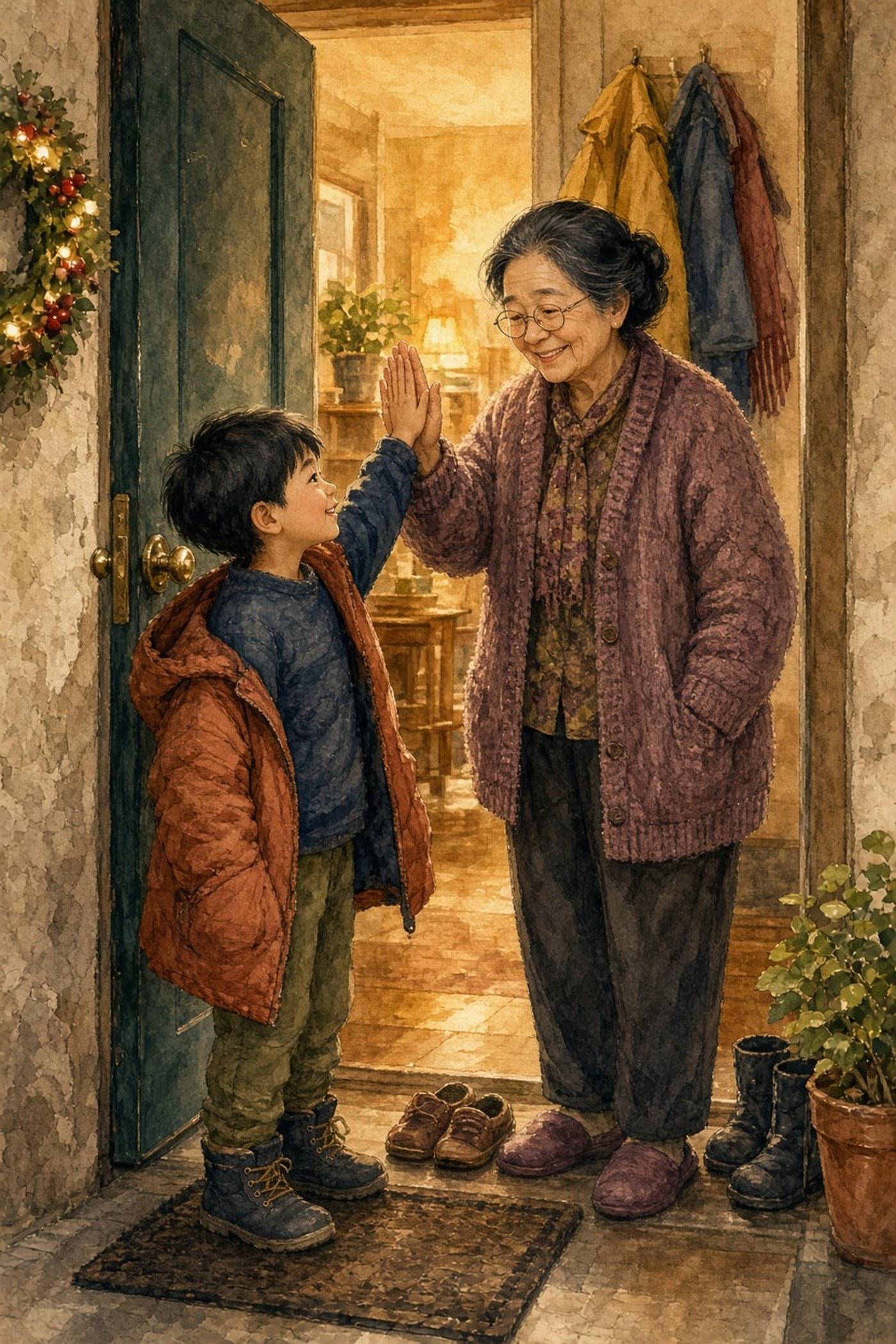
The suitcase is still in the hall when Po Po opens her arms. Your kid steps sideways. Someone clears their throat.
November 20 is Canada's National Child Day, the anniversary of the UN Convention on the Rights of the Child. In plain English, kids get a say in what happens to their bodies, including when relatives lean in for a hug.
The greeting can stay warm. The hug does not have to be mandatory. Practice three short exchanges before the next arrival.
A forced hug teaches the wrong lesson about whose body it is. A wave, high-five, or bow still says hello.
Before anyone rings the bell
Use the week around National Child Day to practice the line with your partner, before coats hit the floor.
Holiday visits put the awkward part at the door. Someone leans in. The kid steps back. An elder looks wounded, and the other adult goes quiet.
In a lot of Asian and multicultural houses, a hug or a kiss still reads as respect. A wave, a high-five, a bow, or a plain "Hi, Gong Gong" can mean the same thing without borrowing the kid's body.
Agree ahead of time that the child's choice stands, even if Po Po looks sad for a second.
Three door exchanges you can steal
1. When the child declines the hug
Grandparent: "Come give Po Po a hug!"
Parent (warm, steady): "You can hug, high-five, or wave. Your pick."
Child: waves.
Parent: "Perfect. Hi, Po Po. We're so glad you're here."
2. When the grandparent feels hurt
Grandparent: "She used to always hug me. Did I do something wrong?"
Parent: "She loves you. We're teaching her that her body is hers, so the greeting is her choice. A wave still counts. Want to help her hang her coat?"
If they push: "I know it feels different. Helping us with this keeps her safer with everyone, not only relatives."
3. When the other parent freezes
Partner looks at you, then at the kid, and says nothing while an uncle leans in.
You (to the room, still friendly): "We're doing choices at the door. Hug, high-five, or wave."
Then to your partner, later in the kitchen: "Next time, jump in with the same line. I need you on it."
Have that kitchen talk before the visit. Freezing is common. If nobody says anything, the lean-in keeps happening.
A text you can send before they arrive
Copy and send:
"We're so excited to see you. We're practicing greeting choices with the kids (hug, high-five, or wave) so they learn their body is theirs. Please ask them which they want. They love you either way."
Saleema Noon, a Canadian sexual health educator, has told parents for years to brief relatives ahead of time so a declined hug does not land as a personal rejection. The text does that work before shoes come off.
If an elder answers with "In our culture we always hug," try: "We still care about respect. We're adding a choice so the kids can show it in a way that feels safe."
What to practice with your kid tonight
Role-play once. You play Gong Gong. They practice saying "wave" out loud.
Tell them: "If someone asks for a hug and you don't want one, look at me. I'll help."
Then give the grandparent something else to do: take the coats, open the snack, look at the drawing on the fridge. The visit stays warm. The body still belongs to the kid.