
They Love Each Other. They Just Can't Talk.
McDonald's 2024 Sweet Connections campaign put a brand spotlight on the grandparent language gap, with Gallup-backed numbers, real grandma-grandchild pairs, and an AI video tool. The feeling is older than the McFlurry.
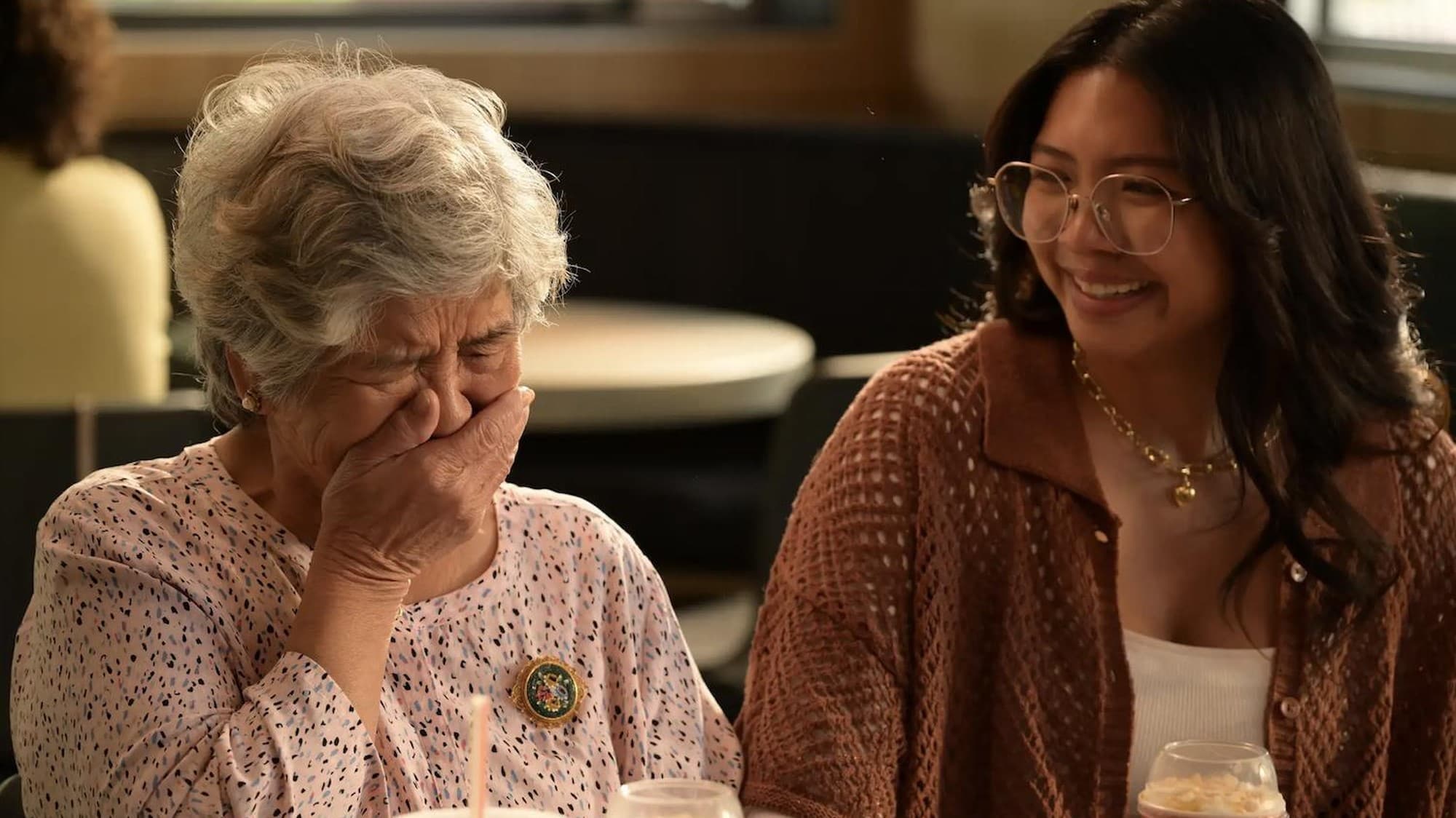
You can love someone and still run out of sentences at their kitchen table.
That is the diaspora heartbreak McDonald's named in public in 2024. To launch the limited Grandma McFlurry (nationwide May 21, per the company's May 16 PR Newswire release), the brand and multicultural agency IW Group built Sweet Connections: documentary-style spots with real grandchild and grandmother pairs, plus an AI site where users could record an English video and translate it into dozens of languages with voice cloning and facial reanimation. Asian Journal coverage of the Filipino American pairing featured granddaughter Aina and her lola, Herecilla, reacting when a Tagalog message arrived looking and sounding like Aina was speaking her grandmother's language.
Brand campaign, yes. Also a clean description of a feeling many households already know. Campaign materials cited Gallup research that more than 40% of Americans have difficulty communicating with grandparents because of generational language barriers, with higher rates in Asian American and Hispanic families where U.S.-born grandchildren grow up in English while foreign-born grandparents may speak little of it. Soft-serve sold out early. The language gap did not.
What the research already showed
Pew Research Center's 2013 portrait of second-generation Americans found about nine-in-ten U.S.-born children of Asian immigrants are English proficient, while only about four-in-ten say they speak their parents' native tongue well. Focus-group work with Chinese immigrant grandparents in Los Angeles (Xu and colleagues, Gerontology and Geriatric Medicine, 2018) repeatedly names limited shared language as a barrier even when affection is strong.
A national brand finally put advertising money behind a gap diaspora families treat as private shame. The useful takeaway is permission: tools can help, presence still counts, and you do not owe anyone a perfect heritage-language performance to prove you love your elders.
An AI tool is a bridge. It is not a personality transplant.
SweetConnections.ai (also described in Shorty Awards materials as sweetconnections.co) let people record a message, translate it into about 30 languages, and share the result privately or on social. Shorty entry results claimed more than 145,000 site visits in the first week, with Spanish, Chinese, Hindi, Russian, and Italian among the most popular translation targets. Workshops in cities including New York, San Francisco, Seattle, and Dallas taught elders how to send messages the other direction, into English.
Useful, when it works. Also imperfect: robotic cadence, flattened jokes, glitches that make Grandma frown. Tariq Hassan, then McDonald's USA chief marketing and customer experience officer, told Asian Journal he struggled to communicate all his emotions to his Sitty, whose first language was Arabic. That honesty is the point. A translated "I love you" can open a door. It does not replace cutting fruit together, sitting through a quiet afternoon, or learning ten high-frequency phrases you can actually say out loud.
Shame is the quieter product being sold at dinner
Relatives sometimes treat lost heritage language as proof you do not care. Friends sometimes treat distance from grandparents as coldness. Both scripts miss the structure: English was pushed for school, elders never got easy English classes, and the middle generation became permanent interpreters until everyone pretended the gap was optional.
If a commercial made you cry, that is data. Use it without turning your household into a fluency contest. Teach a child one bedtime line. Let an elder teach a recipe without requiring full conversation. Record a voice note with a parent as interpreter when direct speaking freezes you. Decline the shame speech at Lunar New Year with one calm sentence: "We are building closeness on purpose. Fluency is not the only scoreboard."
Where to go when the ad ends
McDonald's rotated the spots into broader buys, including NBA Finals airings, and the campaign later took ANA Multicultural Excellence Grand Prize and Shorty gold for multicultural community engagement. Awards fade. The kitchen table does not.
Start with our grandparent language-gap shelf if you need language for the loneliness. Pair it with bonding-without-shared-language rituals for this weekend, and with the bilingual phrase library when you want five usable lines tonight instead of a fluency fantasy. If a child is already translating at clinics, read the language-broker guide before the next appointment.
The campaign's best idea was not the dessert. It was admitting that love can be loud and still short on words.