
National Survey Maps Who Cares for Kids Too Young for Kindergarten
HHS tables from the 2024 National Survey of Early Care and Education count 12.8 million children in regular non-parental care. Under age 3, unpaid individual care is most common; ages 3 through 5, centers lead. Kids can land in more than one type in the same week, so one “primary” label leaves hours out.
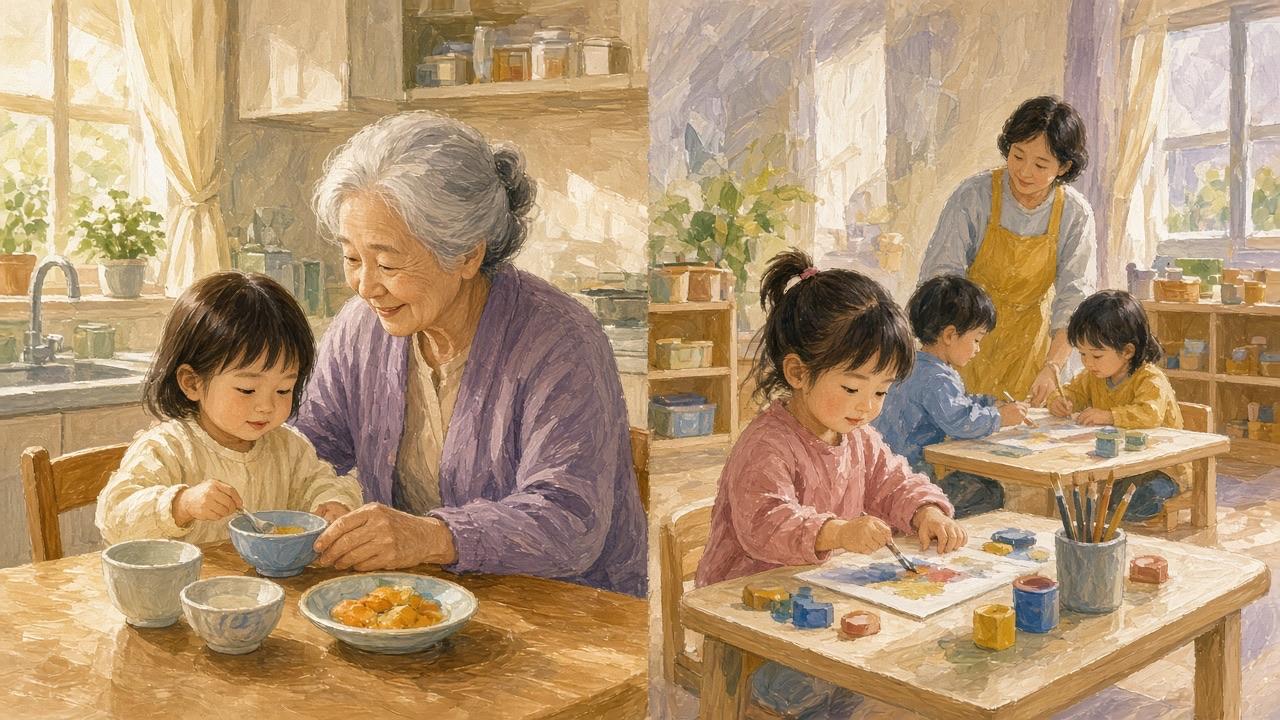
A toddler’s week can open at a child-care center and continue at a grandparent’s table. The neighbor who covers Friday evening may be on the calendar too.
New tables from the Administration for Children and Families, based on the 2024 National Survey of Early Care and Education, count how many children not yet eligible for kindergarten spend at least five hours a week in non-parental care, and which kinds of care they use.
About 12.8 million kids meet that “regular care” bar. The same tables show why naming one primary setting can miss the rest of the schedule.
Parents and policymakers often name one daycare. Many real weeks stack relative care, paid home care, centers, and wrap-around hours that do not fit a single box.
What the week looks like by age
The mix changes as kids get older.
In 2024, 53.2% of children under age 3 spent at least five hours a week in non-parental care. That is 5.8 million of 11.0 million toddlers and infants.
Among all children under 3, individual unpaid care was the most common type at 24.4%. In survey language, that usually means someone the family already knows who is not paid by the parent: a grandparent, aunt, or friend on the calendar every week.
Center-based care for the under-3 group rose from 14.3% in 2019 to 18.2% in 2024. More babies and toddlers are in classrooms than five years earlier. Unpaid individual care still outruns centers for that age.
For ages 3 through 5, 69.3% are in regular non-parental care (7.0 million of 10.1 million). Center-based care leads that group at 42.1%. Preschool and child-care centers take a bigger share of the week once kindergarten is closer.
The tables also count paid individuals, with or without a prior relationship, and “other organizational” care such as before- and after-program wrap-around. Those hours often sit between the relative day and the center day.
Why “primary care setting” leaves hours out
The NSECE tables note that children can use more than one type of regular care, or even two arrangements of the same type. The percentages by type are not separate boxes that add to 100.
A separate Education Department survey helps explain the wording trap. In the 2023 Early Childhood Program Participation survey, parents report relative care, nonrelative home care, and center care.
For each type, the form asks about the person or center that provides the most care of that type. The report calls that the “primary” arrangement for the type.
A child with Grandma on weekdays and preschool three afternoons has two of those primaries. The survey does not ask parents to choose one overall primary setting.
So when a form or a relative asks, "Where does she go?" the accurate answer may be a short list. The daycare name is real. It is not always the whole week.
What the Asian American numbers show
The published NSECE highlights do not break the 2024 counts out by Asian American ethnicity. The 2023 NHES early-childhood survey does report arrangements for that group.
Among Asian, non-Hispanic children from birth through age 5 not yet in kindergarten (about 989,000 kids), 48% had at least one weekly nonparental arrangement. About half were in parental care only on a weekly schedule, as the survey defines it.
Among Asian American children who used weekly nonparental care, 70% were in center-based care, 33% had relative care, and 14% had nonrelative home care. Those columns can overlap. The same child can appear in both the center and relative counts.
That lines up with the national age pattern: unpaid individual care leads for under-3s overall; centers lead closer to school age. In the NHES Asian American snapshot, centers are common when families use nonparental care, and relatives still cover a large share of hours that never appear on a center invoice.
What to say when someone asks where the child goes
Answer with the week, not only the brand name. "Grandma Mondays and Tuesdays, Little Stars Wednesdays through Fridays" is clearer than forcing one winner.
When you compare notes with another parent, ask how many regular adults or programs are on their calendar for five hours or more. The surveys treat that five-hour mark as the floor for "regular." A one-off Friday night does not count the same way.
If a school, subsidy, or pediatric form wants one primary setting, list the place with the most hours. Add the second arrangement in a comment line if the form allows it.
For diaspora households, count the relative hours when you talk budgets and burnout. Unpaid care is still care. In the under-3 national tables, that category sits at the top of the type list.