
Parents Say They Read With Their Kids More Than Their Parents Did. What Counts When Grandma Tells the Story?
A national ZERO TO THREE survey found that 53% of parents of children five and under say they read together more than their parents did. In a lot of diaspora homes, Grandma's spoken family story is doing some of that same work, with or without a book.
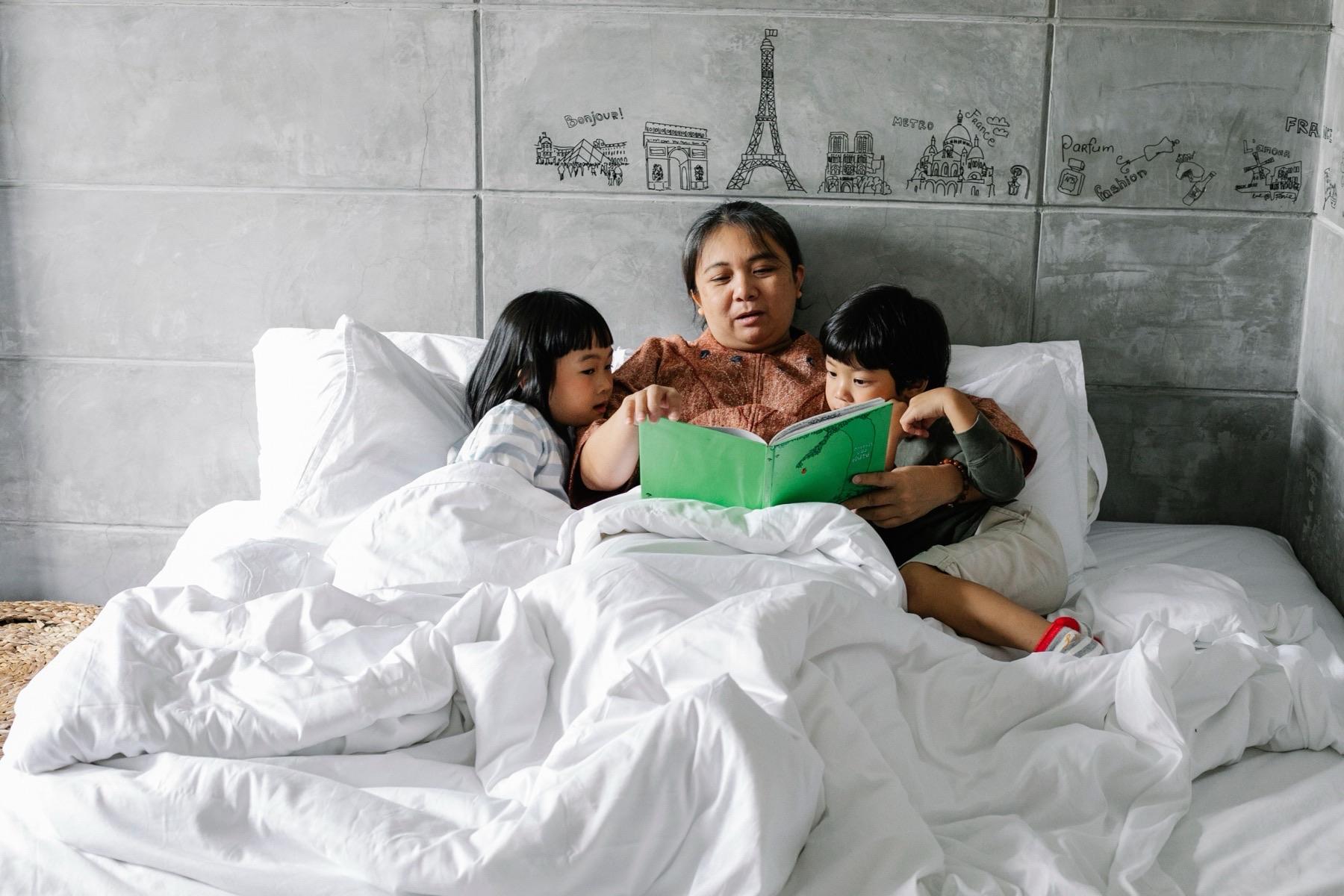
Bedtime can look like a picture book and two voices trading pages. It can also look like Grandma on the couch, no book open, telling the same street-corner story she has told for twenty years.
ZERO TO THREE's First Voice national parenting survey, released October 29, found that 53% of surveyed parents of children five and under said they read together more than their own parents did with them.
That figure is national. The Loran Group fielded the survey online from July 28 to August 15, 2026, among 2,202 parents. The public write-ups do not break out Asian parents separately, so keep the number in that frame: a countrywide self-report, not a map of diaspora homes.
What the survey does not settle is whether Grandma's oral story, maybe in a language the child understands better than they speak, belongs in the same category of togetherness.
More parents say they are reading with young kids. In diaspora households, an elder's spoken story in a heritage language can be part of that same closeness, even when English answers come back.
What the national number actually measures
Parents compared themselves with how they remember being raised.
Fifty-three percent said they read together more. Fifty-nine percent said they play more.
Sixty-one percent said they say "I love you" more often.
The survey asked about more than a dozen behaviors. Reading sat next to affection, play, mental health focus, and discipline choices.
The questions stopped short of who told the story, in which language, or whether the child answered in English while still following every word.
That is normal for a national topline. It also means the elders who carry family stories in Korean, Mandarin, Cantonese, Tagalog, Vietnamese, Hindi, or another language sit outside what First Voice measured.
When Grandma's voice is the page
On our grandparent language-gap shelf, the same household shows up often: plenty of affection, fewer shared sentences.
We covered McDonald's 2024 Sweet Connections campaign as one public naming of that gap, including Gallup-backed figures about difficulty talking with grandparents across languages. Soft-serve was the hook. The lasting piece was permission to stay close without turning every visit into a language exam.
Our guide on recording grandparents' stories starts in that same kitchen: voice memos while tea cools, a recipe narrated mid-stir, photos that unlock a street name before anyone asks about the war.
You do not have to hit record.
A child who understands more than they speak can still take the story in, accent and unfinished clauses included, even when the answers come back in English.
Understanding more than speaking still counts
We wrote about San Francisco Public Library's Cantonese-English family storytime for the same reason.
Gong Gong's words land. The kid still answers in English. A lot of households live right there: they hear more than they can say back.
Stephen Chen, Qing Zhou, and Yuuko Uchikoshi followed Chinese American immigrant families with school-age kids and found that adults' Chinese use with children at home predicted stronger Chinese vocabulary later. Saying the language mattered on a survey form was not enough by itself. Spoken use mattered.
Their study is about parents and home language, not First Voice. The usable takeaway travels anyway: keep the heritage language in ordinary minutes, including story time with an elder, and skip the couch quiz.
If relatives shame a child for answering in English, protect the child first. Hearing still counts. Speaking can catch up on its own timeline.
What to try before bedtime this week
Ask Grandma, Gong Gong, Lola, or whoever holds the stories for ten minutes with the phone face-down.
Try: "Tell the one about the first apartment," or "Tell how you met," or "Tell what the market smelled like in the morning."
A specific ask beats "tell me everything."
If a parent needs to bridge languages, let them paraphrase in chunks. Do not correct the elder mid-sentence for accuracy. Stop while everyone still has energy.
If a picture book is in the room, use it. If the book stays closed and the voice keeps going, count that too.
The national reading bump was about togetherness. An elder's story can belong on the same list.