
Is Netflix’s Steps Worth Putting On for Siblings This Week?
Ali Wong and Stephanie Hsu voice Cinderella’s stepsisters in the Netflix film that landed Friday. We watched for the scary scenes, the sibling fight, and the age when the fairy-tale flip starts to land.
Thanksgiving week means cousins on the couch and someone asking what is safe to press play on. Netflix’s Steps showed up Friday, Nov. 20, right in that stretch.
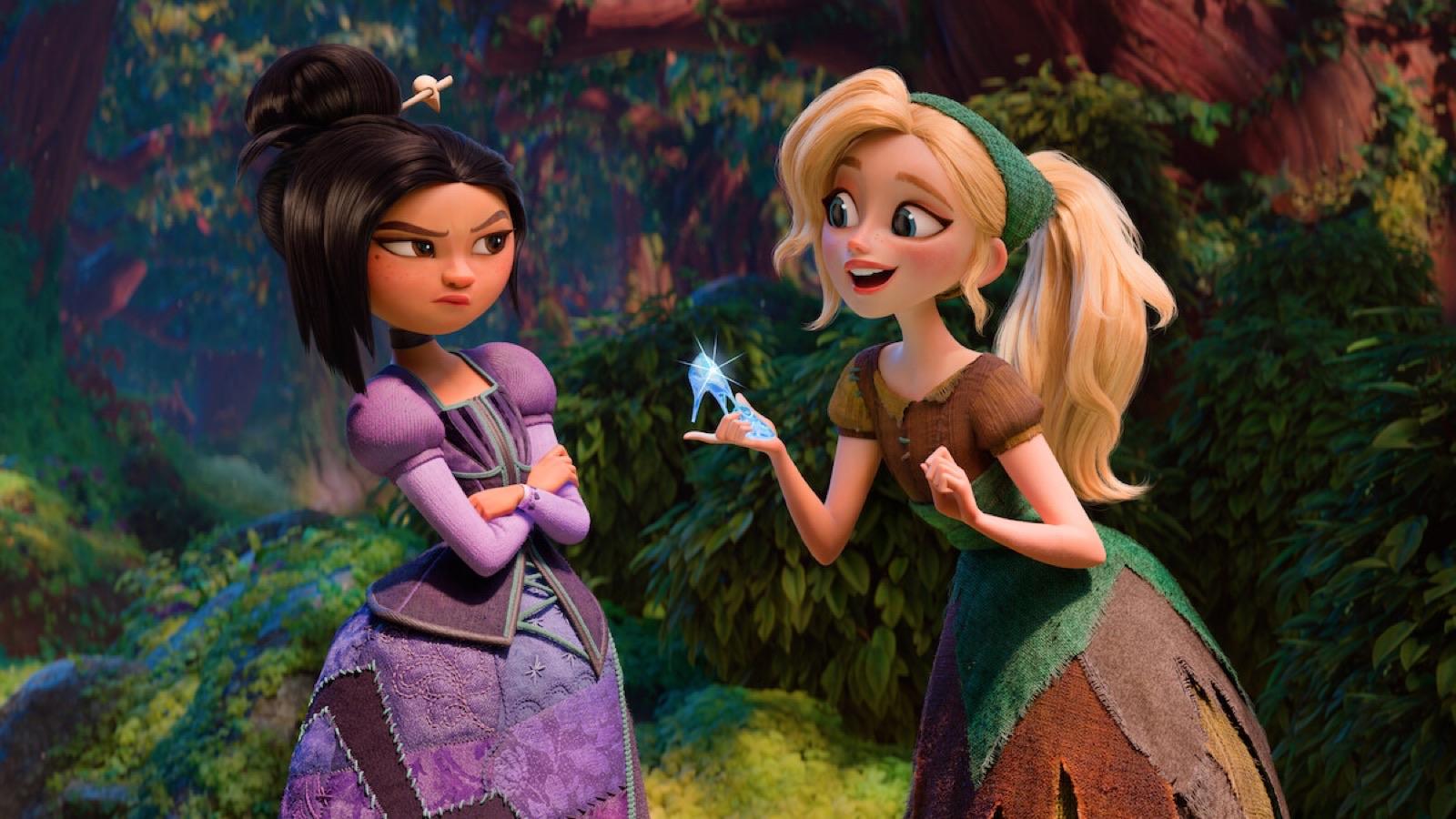
Ali Wong voices Lilith and Stephanie Hsu voices Margot, the so-called evil stepsisters. Amanda Seyfried is Cinderella. Alyce Tzue and John Ripa directed the 94-minute PG animation.
We watched a screener with siblings in mind.
Can two kids who already argue over the remote sit through it? Where does it get scary? And how old does a child need to be before the fairy-tale flip feels like a joke they are in on?
Treat it as a school-age sibling movie. Leave the preschool nap-time pick for something softer.
Common Sense Media puts it at age 8+. That matched what we saw.
Holiday movie night needs a clear age read. Steps works when kids already know Cinderella well enough to feel the flip, and when someone can pause for the spooky stretches.
What you are actually watching
The classic Cinderella plot still happens. Lilith is tired of living in that shadow, so she grabs the Fairy Godmother’s wand and hijacks the royal ball with Margot.
That opens the door for Priscilla, the real mean girl of the piece, voiced by Nikki Glaser. Lilith ends up needing Cinderella again.
They fight biker trolls, outrun a murderous man-nanny, and cut through a place literally called the Screaming Woods.
Tzue has said the film follows two very different sisters who slowly see how alike they are. One fits the fairy-tale kingdom. The other keeps bumping into its rules.
Lilith and Margot are Asian sisters who move into a mostly White storybook town when their mother marries Cinderella’s father. Feeling left out sits under a lot of the conflict, even if nobody delivers a speech about it.
Wong has said she wanted her own daughters to have more than one Asian lead to root for. On screen, Lilith is the bristly older sister. Margot is the frog-obsessed peacemaker stuck in the middle.
The scary parts (and when to sit closer)
The rating is PG for action, thematic elements, rude humor, and brief suggestive material. The peril is cartoon, and it shows up a lot.
Expect sword-carrying soldiers, angry trolls, chases, falls, and a near-drowning stretch. Magic turns people into frogs and into porcelain-doll armies that feel uncanny more than slapstick.
The Screaming Woods live up to the name. The BBFC notes jump scares and bladed weapons, then says comedy and reassuring endings usually catch the fall.
There is quieter sadness too. Children’s parents die in the backstory, and there is a brief funeral beat.
Insults fly: stupid, idiots, freak, pathetic, butts. Romance stays light (flirting, minimal kissing). The UK board also flags flashing images for photosensitive viewers.
If your youngest still covers their eyes for Shrek swamp scenes, sit beside them for the woods and the doll army. Pause when you need to. That is what a living-room watch is for.
Why the sibling fight is worth the couch time
The fight that matters is who got protected when it counted. The prince is almost beside the point.
Early on, the blended family is happy. Then Priscilla wedges in, and Cinderella fails to stand up for Lilith and Margot.
Years of resentment follow. Lilith leans into the “evil stepsister” costume. Margot keeps trying to pull everyone back to the same table.
Watching as a parent, that middle-kid job felt familiar. So did the older kid who would rather look tough than ask to belong.
The sisters have to practice compassion and teamwork without pretending nobody messed up.
If your couch already has a Lilith and a Margot, the living room will go quiet in the right places. That is a good use of a holiday night.
When the fairy-tale flip starts to land
Kids who only know Cinderella as “nice girl, glass shoe, mean stepsisters” will still follow the adventure. The rewrite lands later.
Around eight and up, most kids have heard the original enough times that “what if the stepsisters were not the villains?” becomes a game they can play.
Younger children may still enjoy the songs, the slapstick, and Margot’s frog energy. They will miss more of the joke.
Common Sense Media’s 8+ call matches that. School-age and tween households get the most out of it.
Preschoolers who handle Frozen-level stakes can try it with a parent nearby. A PG sticker is not a free pass for a four-year-old alone on the beanbag.
Before you hit play, ask your child who the mean people are in Cinderella. If they can name the stepsisters without thinking, they are ready for the flip.
What we would press play on this week
Yes for siblings who already trade eye rolls across the couch, roughly ages 8 to 12, with a grown-up who can pause the woods.
Maybe for a tough six- or seven-year-old who knows the fairy tale cold. Skip it as background noise for toddlers while the pie cools.
After the credits, keep the talk small.
Try: "Which sister felt left out first?" Or: "When did Cinderella mess up, and when did Lilith?" Or, for the kid who always plays peacemaker: "What did Margot want that was not about winning?"
Skip the morals speech. One sentence they can take back to the cousin room is enough.
Then put on whatever the eight-year-old already wanted next. Steps still works as the Friday drop you can run again on Wednesday night.