
Read Grace Lin’s The Ugly Vegetables Before the Thanksgiving Potluck
Grace Lin’s picture book follows a girl whose family grows Chinese vegetables while the neighbors grow flowers. Before the Thanksgiving potluck, read it aloud, cook her soup recipe, and send kids to the table with one question for a grandparent.
Before the potluck tote bag comes out, put one picture book on the couch.
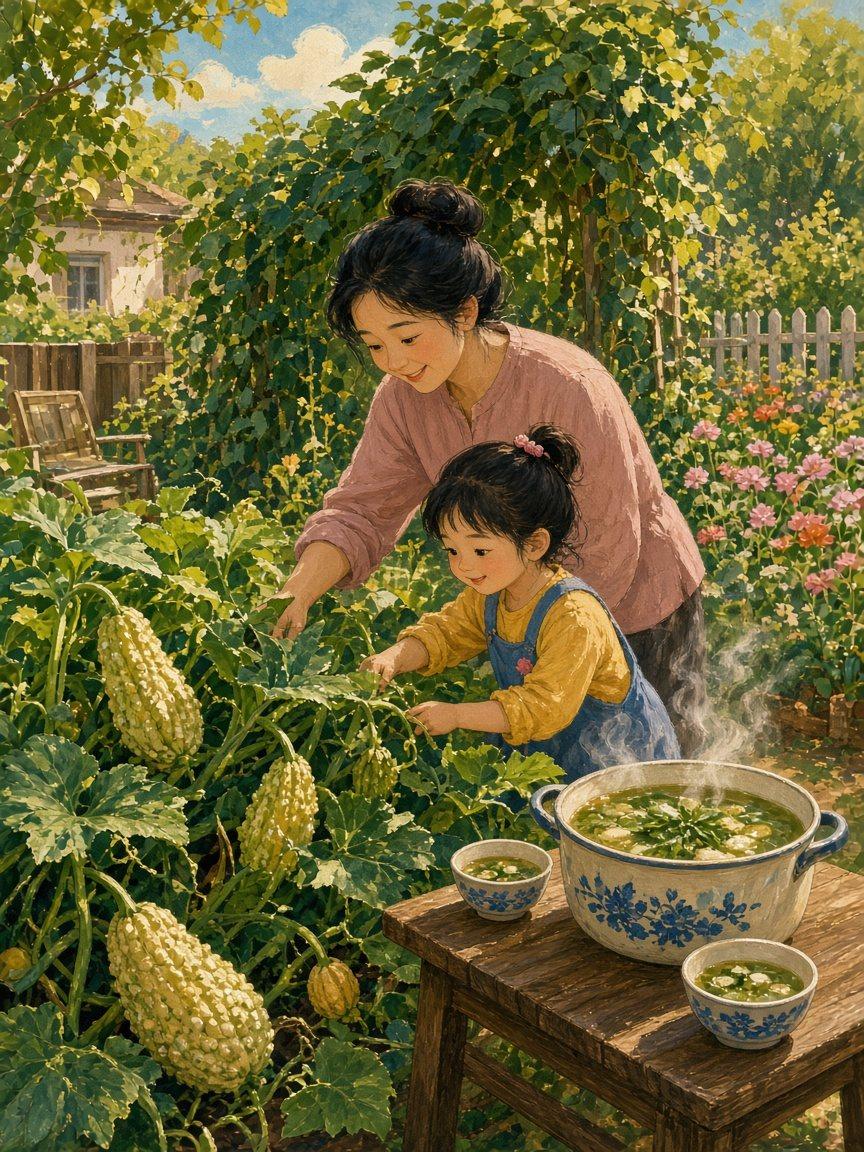
Grace Lin’s The Ugly Vegetables (Charlesbridge, 1999) follows a girl who helps her mother plant a garden while the neighbors grow flowers. Their rows look lumpy and dark next to everyone else’s blooms. Mama says the vegetables are better.
The girl is not convinced until harvest turns into soup that pulls the whole street to their door. Lin based the story on her own childhood garden. The book suits kids about 4 to 8, and the back matter includes a Chinese vegetable glossary plus the Ugly Vegetable Soup recipe.
Read the book together, make the soup if you can, and take one question to a grandparent or the dinner table.
A Thanksgiving potluck is full of dishes neighbors may not recognize. Lin’s book gives kids a story for the bowl they are about to carry in.
What to read aloud
Start with the gardens. The girl sees rainbows of flowers up and down the street. Her family’s patch looks ugly: fuzzy leaves, prickly stems, little yellow blooms.
Mama keeps saying the vegetables are better than flowers. Wait and see, she tells her daughter.
When the soup smells so good that neighbors stand on their porches "trying to eat the smell," the trade begins: flowers for bowls. Next spring, both gardens mix a little. Flowers show up in the vegetable patch. A few Chinese vegetables show up next door.
Pair it with the soup recipe
Lin publishes the Ugly Vegetable Soup recipe as a free PDF on her site, the same one printed with the book. Plan a Chinese grocery stop before you cook. The PDF uses Chinese names; English glosses include Chinese cucumber, Chinese eggplant, chrysanthemum greens, Chinese spinach, and hollow-stem greens.
The method is short enough for a school night. Boil broth, water, and dried scallops. Slip in cornstarch-coated chicken. Simmer the firmer vegetables about ten minutes. Finish the leafy ones in a one-minute boil. Add pepper. The recipe serves about five.
If you cannot find every vegetable, cook what you can and name what you skipped. The smell in the hallway matters more than a perfect match to the glossary.
One prompt for a grandparent or the dinner table
After the last page, give the kid one sentence to ask:
"What did your family grow or cook that your neighbors were curious about?"
Try it with a grandparent on a video call, or with whoever is chopping at the counter. Answers can be bitter melon, kimchi that fogged the fridge, a curry that filled the apartment hallway, or a flower bed that confused the next yard.
At the Thanksgiving potluck, the same question works with a cousin. Point at the dish they brought. Ask what someone once thought looked strange until they tasted it.
If school only has flowers on the worksheet
Some November classrooms talk harvest as pumpkins and cornucopias. Lin’s garden is another harvest story that fits in a backpack.
Send the book, or place a library hold, the night before the class potluck. Pack a thermos of the soup if that is allowed. Or tuck the question on a sticky note inside the lunch box.
If your kid feels weird about the dish from home, they already have a line: our vegetables looked ugly too, until the neighbors wanted the recipe.