
The Waitlist and the Empty Seat
You can wait months for a daycare seat while a center still has a chair with nobody in it. A paper posted October 8 follows that back to old applications, slow offers, and rooms sorted by age. Quebec directors counted the same loop in October. An open chair can also mean there is no teacher.
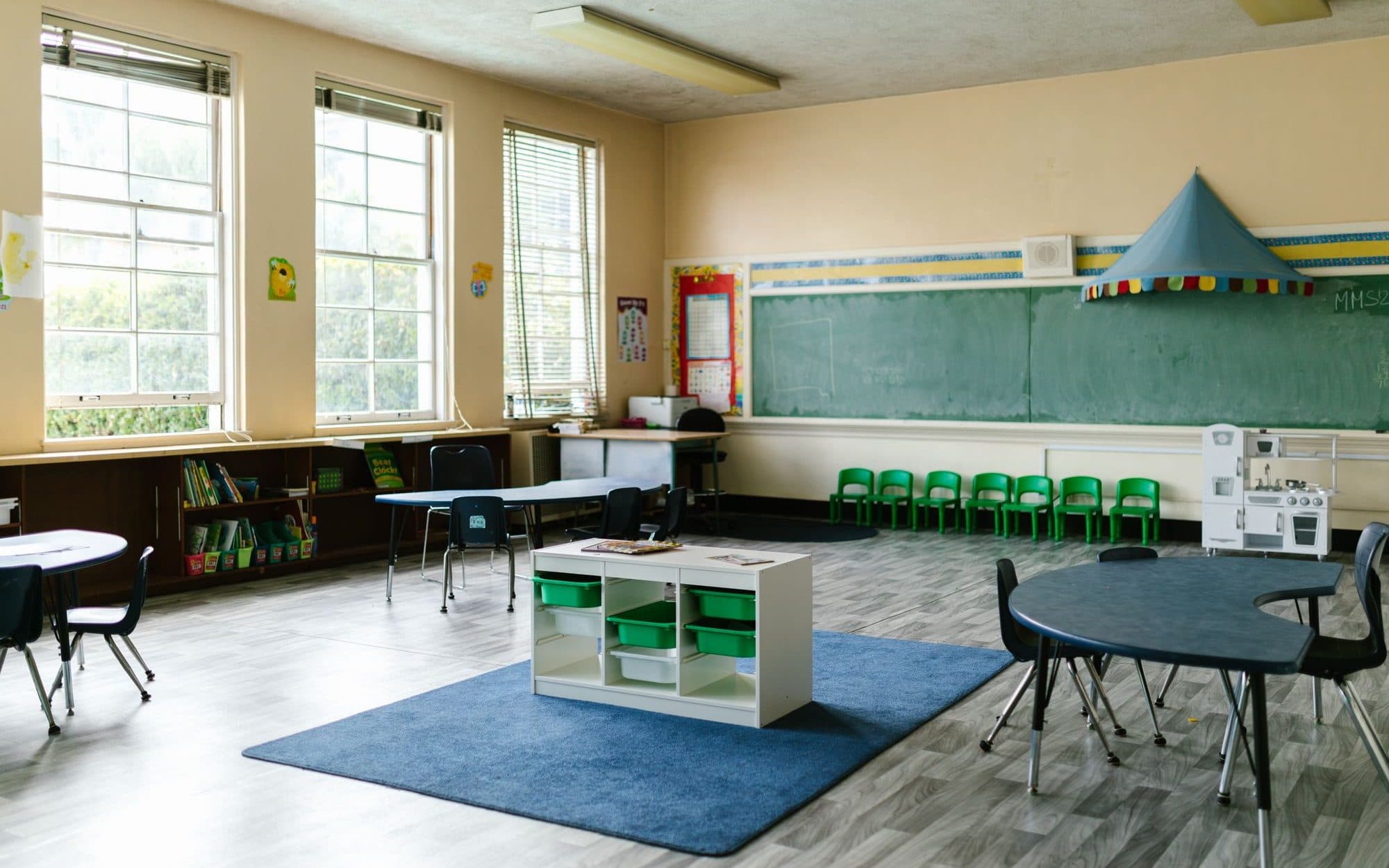
You can wait months for a daycare seat and still hear that the center has a chair with nobody in it.
The paper's account of enrollment is simple. You apply to several centers because joining costs nothing.
Centers rarely make you withdraw when a grandparent, a nanny, or another center works out. The old name stays, and it still looks like demand.
The center cannot tell a family that still wants the seat from a family that moved on. It finds out by offering the seat to one name and waiting. While it waits, the chair is empty and the next family stays on hold.
Your child is getting older through that wait. A seat in the infant room and a seat in the toddler room are different openings. By the time your name comes up, your child may no longer fit the room you applied for.
Yueyang Zhong at London Business School wrote this up with Jun Li at the University of Michigan and Senthil Veeraraghavan at Wharton. The paper went up on October 8.
A long list can sit beside an empty chair. Before you decide the center is full, ask if that chair has a teacher, if your child still fits the room, and if the names ahead of you still want it.
What one offer actually takes
Their example is a 10-seat infant room. A family that has just joined takes the seat about 38 percent of the time. After many months on the list, fewer say yes.
To enroll one child, the room in the example makes nearly seven offers. The list runs to about 100 names, and about 85 percent of them will not enroll. The family still waiting gets the call in about 21 months.
The authors chose those figures so the example would land near two things a partner network already sees. Infant rooms there enroll fewer than one child a month, and they make about eight offers for each child who starts.
The 85 percent and the 21 months belong to the model. The network did not publish a count of stale names.
The authors also talked with people at Bright Horizons, Gretchen's House, the University of Michigan's child care, and Yale. Those were conversations. The paper does not turn them into a survey of directors.
The habit that came up is one most parents will recognize. You keep the listing even when you are not ready to start, because it costs nothing to stay on, and saying no means losing your place.
In the model, sorting out one offer takes about a week. A real center may be faster. Quebec's portal has its own version of that wait, written into the rules.
Directors in Quebec counted it
On October 10, Canadian Press reporter Caroline Chatelard described the same mismatch inside Quebec's registration portal. The Ministry of Families said more than 30,000 children were still waiting for an early-childhood place. Centers still had empty seats in mid-September.
The Association of Early Childhood Centre Managers asked members in early September, and more than 400 answered. 63.3 percent still had vacant spaces when they formed groups in May. 91.3 percent had seen a child who was already registered show up on a list: at another daycare, already in school, at another of the provider's own sites, or a family that had already refused that center.
Some of those directors made more than 200 calls to fill a few seats.
Vanessa Gagnon-Desjardins runs Les p'tits Montois, an early-childhood center in the Bas-Saint-Laurent. She used to fill a seat in less than a week. Under the portal it can take two weeks.
The ministry hands her one child's name at a time, or three names if the seat is free within 15 days. Parents have five days to visit after the first try at contact, then two days to answer. The deadlines are there so a family that is harder to reach does not get skipped.
Hélène Laperrière directs CPE du Parc in Montreal. Until September she could not see a child's age on the start date, only a band. A child of 17 months and 29 days appeared as under 18 months, so her infant room never saw them.
"Babies between 16 and 18 months are not real infants," she said. "They don't have the same needs." Noémie Vanheuverzwijn, a ministry spokesperson, said the bands were meant to stop centers from passing over spring birthdays, and that the age display has since been changed.
Marjorie Peyric speaks for Ma place au travail, a parent group. Many parents register at a large number of centers and never withdraw.
The portal does not show an exact place in line. It shows a band: 0 to 10, 11 to 50, 51 to 100, or more than 200.
"It might be a bit unrealistic to think that all parents will update their files," Peyric said. Vanheuverzwijn said families are asked to update their files and drop the applications they no longer want. If they do not respond, the application can be suspended until they turn it back on.
The ministry said a cleanup of inactive files is underway.
When the empty chair is about money or staff
An empty chair has a second explanation. Elliot Haspel wrote about it in The 74 on February 12. Families are on waitlists, and many programs have fewer children than they want, because tuition is more than families can pay and because directors cannot hire.
In an early 2025 poll by the National Association for the Education of Young Children, more than half of directors said they had fewer children enrolled than they wanted. Among the under-enrolled programs, 41 percent named parents' inability to pay as the top reason. A shortage of teachers, and trouble keeping them, were the next reasons.
The Wisconsin Early Childhood Association looked at centers around October 2025. Most were at about 75 percent of licensed capacity, with more than 33,000 seats unfilled. The group estimated those seats would need about 4,000 more educators.
If you are on a list, the opening you hear about might be any of these. The room may have no teacher. The price may be more than families around you can pay. Or the names ahead of you may have found care months ago and left themselves on the list.
What to do with your own name
If you have already accepted a place, take your name off the other lists when you can. Peyric is probably right that a lot of parents will never get around to it. The name you leave up is a call a director makes while a chair sits empty.
If you are still waiting, ask whether this seat has a teacher, and what age the room is on the day you would start. Ask how many families they reach before they find someone who still wants it.
When they call, answer. Silence holds the chair. "Not now, but keep me" lets them move on if you are covered for the moment.