
Nearly Half of Young American Children Still Live in Child-Care Deserts
A national analysis finds 46% of U.S. children under 6 live where licensed child-care supply falls far short. Grandparents and relatives fill part of that gap, but family care has costs the map cannot show.
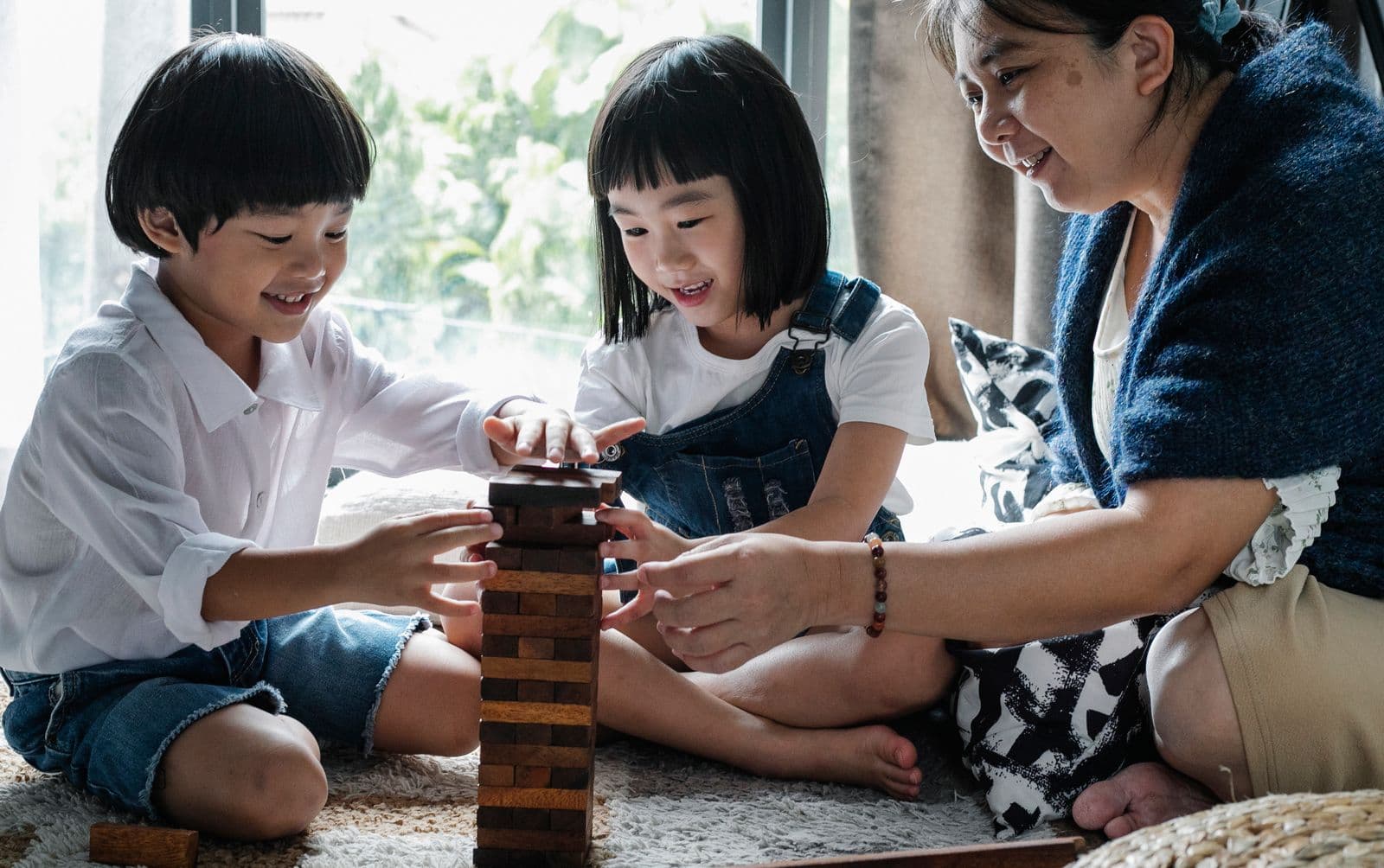
A child-care desert does not always look empty. It can look like Grandma at the kitchen table, cutting fruit while a parent races to work.
A 2026 Center for American Progress analysis estimates that 46% of U.S. children under 6 lived in a licensed child-care desert in 2025. CAP defines one as a census tract with at least 30 young children and either no licensed provider or more than three children for every licensed slot.
That is an improvement from 51% in 2018, but only a small one. In the most remote rural communities, more than 70% of young children live in a desert.
The map measures licensed supply. It does not count care from grandparents, aunts, family friends, or neighbors because comparable national data are not available.
That omission matters for Asian American families. It does not prove they are less affected by child-care shortages. It means an arrangement that keeps a parent employed can remain statistically invisible, even when the household has no workable licensed option.
The care system is already a patchwork
First Five Years Fund’s Aug. 4 guide calls the U.S. landscape a mixed-delivery system: centers, schools, religious and community programs, home-based providers, relatives, and other trusted adults. Pew’s March 2026 survey found 39% of working parents who need care use more than one arrangement for the same child. Recent SIPP analysis reported by the Roosevelt Institute found more than two-thirds of children under 5 received some relative care while a parent was unavailable, and nearly half spent time in grandparent care.
Licensed child-care maps reveal a national supply failure, but they cannot show the unpaid relatives keeping many households afloat. Naming both the benefits and hidden costs of grandparent care gives families a fairer plan before illness, work, or burnout removes their only option.
Grandma care is not evidence that the shortage disappeared
Some families actively prefer care from relatives. A grandparent may speak the home language, cook familiar food, understand religious routines, and offer the kind of one-on-one attention a crowded center cannot.
Research with Chinese and Korean American families has found grandparents serving as extensive caregivers while parents work. Heritage-language studies also show grandparents helping preschoolers build oral language and early literacy through ordinary days together.
Those are real benefits. They are not the same as spare capacity in the licensed system.
A family may choose Grandma and still need a preschool two mornings a week, care during her medical appointments, or a reliable place when her energy changes. Informal care can be both the preferred arrangement and the only affordable arrangement available.
The invoice arrives in bodies, money, and boundaries
Calling grandparent care free moves the bill rather than erasing it.
AARP’s 2026 national survey estimates grandparents contribute $731 billion in unpaid caregiving each year, plus $172 billion in direct financial help to grandchildren. Nine in ten spend money on grandchildren, averaging $2,654 annually.
Health effects depend on intensity and circumstance. A U.S. Health and Retirement Study analysis found that heavier grandchild care can worsen physical functioning and self-rated health, with effects driven mainly by grandmothers. Other research finds lighter involvement can support connection and well-being.
The household cost can also be relational. Who decides naps, food, discipline, screens, and language? Can a parent say no to someone providing thirty unpaid hours a week?
East Asian family research describes ongoing negotiation around seniority, autonomy, respect, and exhaustion.
Love does not remove those questions. It makes them harder to ask.
Build the backup before Grandma needs a break
Write down what would happen if the family caregiver became sick, traveled, returned to work, or simply wanted Thursdays back. Do this while everyone is healthy, not during a 6 a.m. scramble.
Start with two named backups. Check whether either can handle a sick child, school pickup, or a full workday. Ask your employer about backup-care benefits and flexible leave before you need them.
Contact your local Child Care Resource and Referral agency through Child Care Aware to identify licensed programs, home providers, and short-term options. Tour one plausible alternative and complete its forms now. A theoretical daycare with a twelve-month waitlist is not a backup.
For the family arrangement itself, agree on hours, transportation, expenses, safety, emergency contacts, and which parenting rules are nonnegotiable. Review the plan every few months, including whether the grandparent still wants the same workload.
The goal is not to replace family care. It is to stop treating one older adult as an entire child-care system.