
Parenting in Filipino American families
What may come up in family life
- A middle name that is the mother's maiden surname
- Tagalog at church, and Ilocano or Cebuano with a grandparent
- Nine Masses from December 16, at dawn or in the evening
- Ninong and ninang, the blessing gesture, and Christmas cash
- November 1 at the cemetery, or a candle at home
- A remittance number decided before the group chat fills up
Language and food
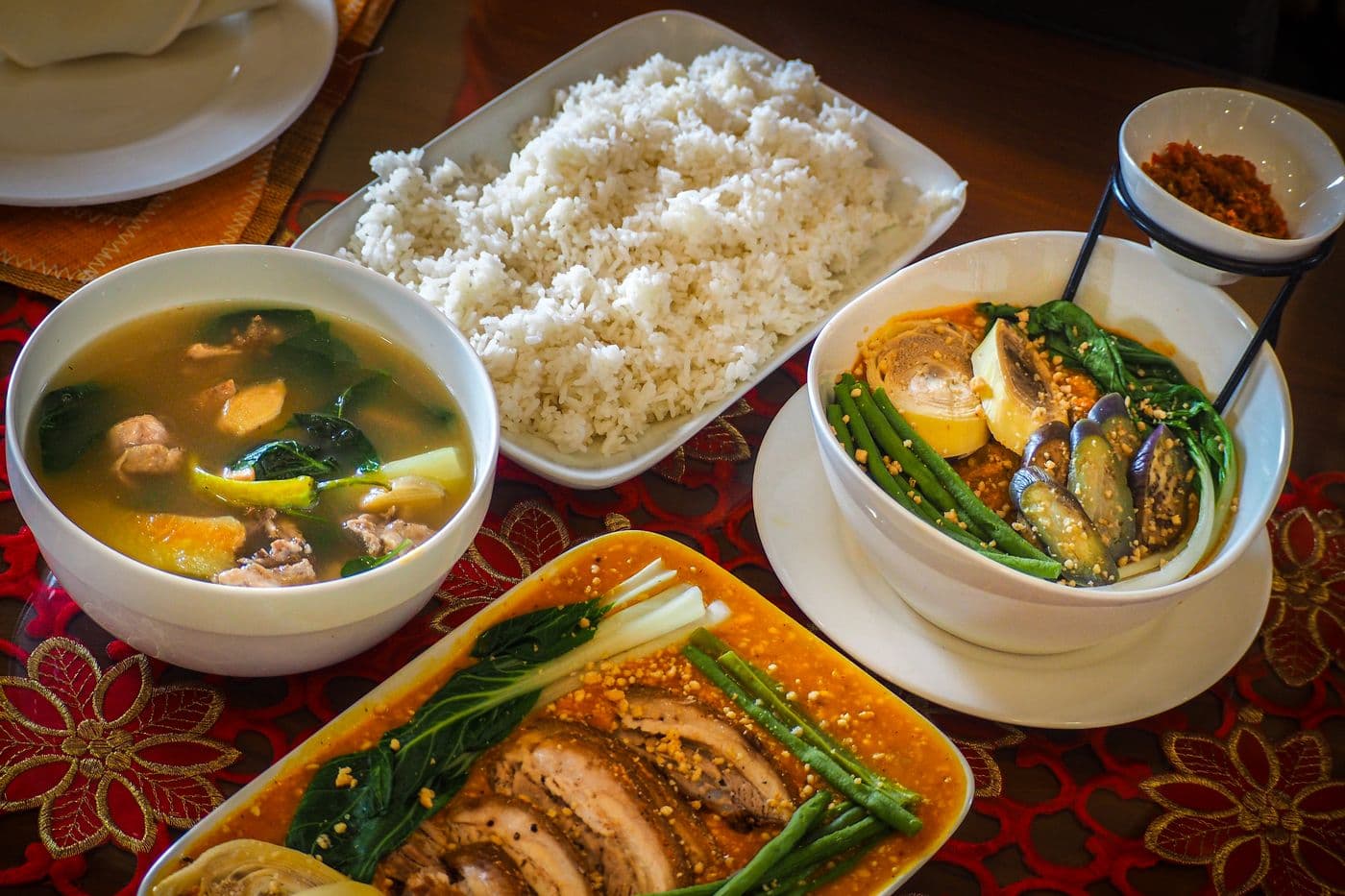
The Philippine Statistics Authority treats the mother's maiden surname as the child's middle name when a father is on the birth record. Bring that certificate to enrollment. Ask the office to keep the surname in the middle-name field, and check the spelling against the passport before the record hardens. Pew's Census read records Filipino or Tagalog in about 43 percent of homes. Ilocano and Cebuano show up as much smaller shares in the same table. A grandparent can still be speaking a language that box barely caught. Ask which one it is before you sign the child up for a Tagalog class that will not help them follow lola. English is already in a lot of these houses, and the visit still has a greeting. Before you go, show the child once: take an elder's hand and bring it to their forehead. The words, if you use them, are mano po. Plenty of kids now skip the words and do the hand. An elder will still know what it is. After a dawn Mass in the Philippines, the stalls outside sell bibingka and puto bumbong. If your parish here has neither, stop for rice and something sweet on the way home so the morning is not only the car.
Grandparents and expectations
Simbang Gabi is nine Masses, December 16 through 24. The Catholic Bishops' Conference describes them as dawn Masses that also moved to the evening during martial law, when a curfew kept people from church at 4 a.m., and the evening hour stayed. Archbishop Socrates Villegas, in Lingayen-Dagupan, told people the word that matters is simba, the Mass, not gabi, the night. A toddler can go at 6 p.m. You can keep three of the nine and let the rest go. The parish may record one or two baptism sponsors. Canon law, as priests explain it to families, asks for a confirmed Catholic who is not the parent, often one sponsor or a pair. The group chat may have a longer list of ninong and ninang who expect a Christmas visit and an envelope. Tell your child which adults are the church sponsors and which are family friends, and decide the visits before December. November 1 is All Saints' Day, a holiday in the Philippines, and November 2 is the day after, when cemeteries are full. Manila's public cemeteries publish hours for those days and close the gates to cars. If your people are there and you are not, light a candle at home and tell your child one name. The Bangko Sentral ng Pilipinas counted $38.34 billion in personal remittances in 2024, and $34.49 billion of that was cash through banks. The United States was the largest source of that cash. A December message about tuition or a roof is part of that flow. Decide what you send before the thread fills up, and keep the number between the adults.
School and identity
DepEd opened the 2024-25 public school year on July 29 and closed it on April 15. The law lets the year begin from the first Monday of June through the end of August. A child who starts in a U.S. classroom in September has already begun a year back home. Say that when a cousin's grade is used as a measuring stick. Half of Filipino Americans 25 and older have a bachelor's degree or higher, a little under Asian Americans overall, in Pew's Census read. The U.S.-born share is 46 percent. The immigrant share is 52. A cousin's diploma is not a script for a second-grader. Pew counts about 1.6 million Filipino Americans in California, out of about 4.2 million nationwide, and about 500,000 in the Los Angeles metro. The state total does not fix recess. Your child can still be the only Filipino in the room, and a teacher can still skip the Philippines in an Asia unit. Send the pronunciation of the name, and one sentence on where the family is from, before the poster project.
Mixed and multiracial family notes
Pew's fact sheet says people who identify as Filipino alone, and no other race or Asian origin, are 67 percent of the Filipino population it describes. The rest are Filipino in combination with something else. A child who hears they are not Filipino enough at a reunion, or not Asian enough at school, can answer later, at home. When one parent did not grow up with the hand-to-forehead greeting or the godparent list, walk them through both before the party. The new parent should know which envelope is expected, and which comment about the child's looks you will answer in the moment.
Recommended guides
A few starting points from our library for this part of family life.
How to Keep Language Alive at Home
Practical ideas for bilingual and heritage-language families without guilt, perfectionism, or treating fluency like the only proof of love.
Leah Chen · 7 min read
Which Holidays Do We Celebrate?
Lunar New Year, Christmas, Diwali, Thanksgiving, Eid: mixed families often inherit more than one calendar. How to choose without guilt or exhaustion.
Leah Chen · 7 min read
Navigating In-Laws, Childcare, and Expectations
When elders want to help and you need boundaries, a practical guide to aligning with your partner and finding balance between gratitude and autonomy.
Anjali Mehta · 7 min read
Planning for Kids When Your Parents Also Need Support
The emotional and logistical reality of supporting aging parents while raising young children, without treating guilt as your only guide.
Priya Raman · 7 min read
How to Set Boundaries With Grandparents
Scripts and frameworks for diaspora families setting visit limits, childcare rules, and pushback on advice—from drop-ins and weight comments to in-laws who help daily.
Mina Han · 9 min read
Raising Mixed Kids When Relatives Make Clumsy Comments
Aunties mean well. Cousins joke. Grandparents forget filters. Here is how to protect your child without cutting off the whole family tree.
Leah Chen · 7 min read

The First Year With Baby When Family Is Far Away
Raising a baby an ocean away from grandparents, aunties, and the village you wish were next door.
Sofia Reyes Tan · 9 min read