
Chores Were Linked to Better Teen Well-Being. Is Family Connection Part of the Explanation?
A Xi'an survey of 1,152 junior middle-school students found more household work tied to closer parent ties, higher resilience, and better mental-health scores. The study is cross-sectional. It does not prove that assigning more chores improves mental health.
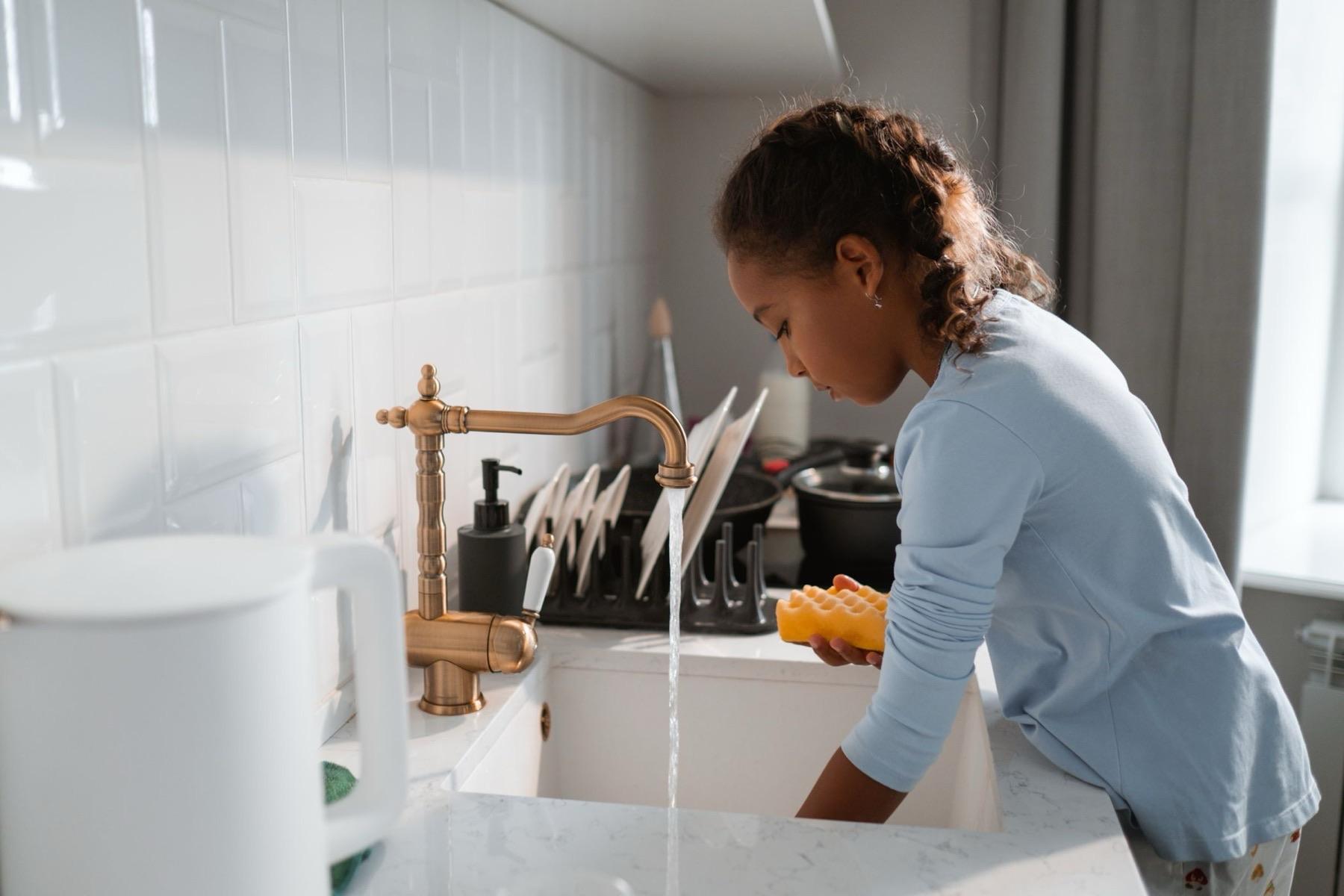
Someone leaves a dish towel on the counter and a teen picks it up without a lecture. For a minute the kitchen feels like a shared shift.
Parents often hear that chores build character. A new Frontiers in Psychology paper from China asks a quieter question: when teens help at home, is the useful part the task list, or the sense of joining family life?
Chenghai Yan of Xi'an Jiaotong University and Xi'an University, with Yunhuan Qu of Shanxi University of Finance and Economics, surveyed 1,152 junior middle-school students in Xi'an. Kids reported how often they washed clothes, cooked or helped cook, cleaned, and tidied their rooms.
They also rated closeness with parents, resilience, and psychological distress on a reverse-scored Kessler K6 scale, so higher mental-health scores meant feeling better.
More household work lined up with closer parent ties, higher resilience, and better mental-health scores. The authors mark the limit clearly. This is an association. It does not prove that loading the chore chart will lift a teen's mood.
Diaspora households already argue about whether kids should "just study." This paper points at participation and closeness, and stops short of a chore prescription for mood.
What showed up with more household work
In simple correlations, teens who did more household work also reported better mental-health scores, closer relationships with parents, and higher resilience.
After adjusting for gender, grade, only-child status, academic performance, hukou, school type, family structure, and parents' education, household work still predicted better mental health in the total-effect model (standardized beta about 0.11).
It also predicted greater perceived closeness with parents and higher resilience.
Those are modest links. They are consistent enough that the authors next asked how the pieces might fit together statistically.
Closeness and resilience carried most of the link
In a serial mediation model, the direct path from household work to mental health shrank to something indistinguishable from zero once parent closeness and resilience were in the equation.
The indirect routes were significant. Resilience alone accounted for about 59 percent of the total indirect effect. Parent-child closeness accounted for about 26 percent. A path that ran through closeness and then resilience accounted for about 15 percent.
Read that in kitchen English: the teens who helped more also tended to feel closer to their parents and more resilient under stress, and those feelings sat next to better mental-health scores.
The paper cannot show that chores create closeness. Close families may also ask kids to pitch in more. Either direction can produce the same spreadsheet pattern.
What the authors emphasize is the family context. Household work matters here as repeated participation in family responsibilities and parent interaction, more than as unpaid minutes on a stopwatch.
Association is not a prescription to assign more chores
Yan and Qu say it straight: do not treat these findings as evidence that assigning more household work necessarily improves mental health.
Other Chinese work cuts the other way when the dose or setting is harsh. Xu and Zhang (2024), which this paper cites, found longer housework duration linked to higher depressive symptoms among Chinese adolescents, especially in rural samples.
Western studies the authors cite also say context decides a lot. Housework paired with high conflict or low familism can track with worse mood.
So the usable Saturday question is whether the work feels like joining the household or like punishment after a bad quiz.
Ask the teen to fold laundry beside you and talk about the week. Notice fairness between siblings. Watch whether "help" means belonging or unpaid overtime while adults scroll.
If kids have been told their only job is studying, a shared kitchen shift can be one way back into family life. More tasks will not close a closeness gap that is already full of conflict.