
The Grandparents’ Toy Box: A Cross-Cultural Play Kit That Doesn’t Become Clutter
For diaspora grandparents who see the kids a few times a year, skip the newest plastic. Stock a small shelf of open-ended play that still works when the visitors are three, seven, or ten.
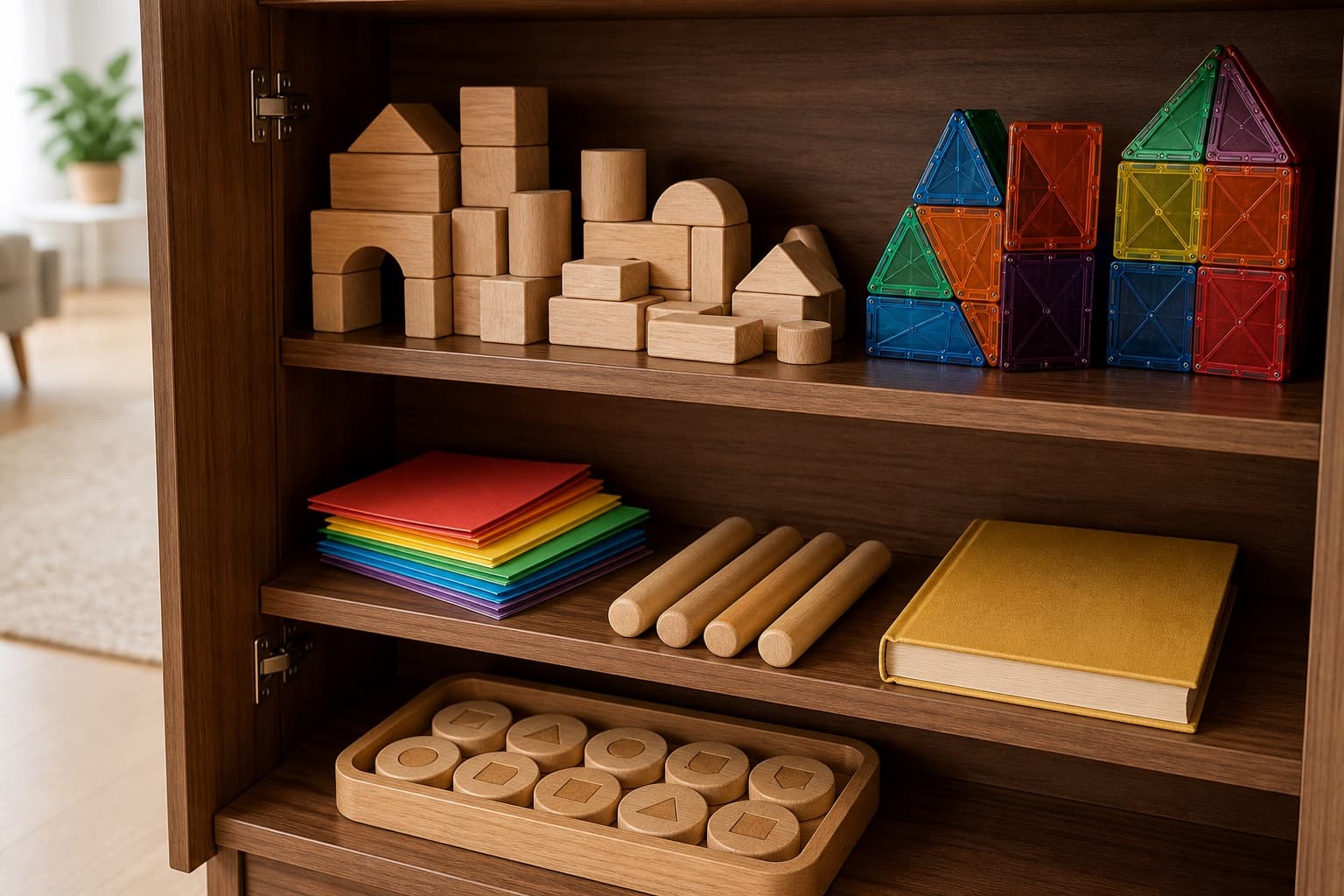
The closet tells on everyone.
After a Thanksgiving visit or a Lunar New Year week, the plastic multiplies. A character set for the toddler who is now in second grade. A battery toy that died in a drawer. Something that looked perfect online and held attention for ninety minutes before the flight home.
Diaspora families spread across time zones get hit harder than most. The kids are not next door, the visits are short and loud, and love tends to arrive as shopping. Then the house pays a storage tax for years.
What actually works is smaller than that. One shelf at Grandma's that feels like home the minute the suitcase hits the floor, and that a first grader and a fifth grader can raid on the same rainy afternoon.
When visits are rare, whatever sits on the shelf at Grandma's house becomes the stage set for the relationship. A short open-ended shelf gives the kids something to do and the grandparents something to keep, without turning the guest room into the family's storage unit.
What earns a permanent place on the shelf
Open-ended materials do the work that character plastic cannot. Wooden unit blocks, a small set of magnetic tiles, washable crayons with a stack of paper, and three or four bilingual picture books cover building, drawing, and language without an age printed on the box.
The blocks a three-year-old piles into a tower are the same blocks a fifth grader turns into a city with rules about who gets the corner lot. One object, a decade of visits.
Add a food-play set if kitchen time is how your family shows love. Wooden dumplings, fruit, or rice bowls invite pretend cooking with Gong Gong, and the whole thing fits in one shallow bin.
Skip anything that only makes sense for one Christmas. If it needs batteries, a subscription, or a character the kids will outgrow before the next flight, leave it at the store.
Culture without a clutter tax
Heritage does not have to mean more plastic with a festival print.
Korean households can keep a compact yut set. The sticks and board travel light, and extended family can play across ages without a screen. Children's mini sets are sold for roughly ages five and up; younger kids can still throw sticks with a grown-up calling the moves.
Families who play mahjong can add a child-safe matching or tile game designed for kids, not a full adult set with swallowable pieces. The point is shared table time, not teaching tournament rules on day one of a visit.
Origami paper costs almost nothing and takes up no shelf at all. It buys a quiet hour on a wet afternoon, and if nobody wants to keep the cranes, they go in the recycling on the way to the airport.
Bilingual books do double duty when English and the heritage language share a page. Leave two or three favorites out and keep the rest in a closet bin, so the shelf still looks calm when the kids walk in.
Rotation is how a small kit stays interesting
Montessori classrooms have long limited what sits out at once, and parents who rotate toys at home are borrowing that idea. Less on the shelf, more attention on what is actually there.
Rotation works even better at a grandparent's house, because the kids are not around daily to get bored on their own schedule. Keep six to ten things visible, put the rest in two labeled bins behind a closed door, and swap two or three pieces in the week before a visit.
When a new gift arrives from an auntie, it does not automatically join the permanent shelf. It goes into the rotation, or it turns into an experience instead: zoo tickets, a cooking afternoon, an hour at the fabric store.
The Dauch numbers are the reason to trust the instinct. Sixteen toys on the floor gave those toddlers something to switch to. Four gave them a reason to stay put.
Safety across ages three through ten
A kit meant for a wide age span has to respect the youngest visitor in the room.
U.S. Consumer Product Safety Commission rules ban small parts in toys intended for children under three, and warn that balloons and some small balls remain choking hazards past that birthday. Magnetic tiles marketed as toys must meet ASTM F963 limits so loose magnets are not easy to swallow; still check for cracked casings before every visit.
If a toddler and a ten-year-old share the same house for a week, put the small-piece games on a high shelf and bring them down only when an adult is in the room. The open-ended core (large blocks, big crayons, board books) can stay low.
Washable art materials matter more than elegant ones. Grandparents who dread marker on the sofa will use the kit less, and an unused kit is just prettier clutter.
A short script for both sides of the family
Parents can say: "We are trying to travel light and keep your place from turning into a toy warehouse. They light up for the blocks, the books, and one game they can play with you. The character stuff can stay at our house."
Grandparents can say: "We keep a shelf ready for you. These are the things that live here. If you want something new for your birthday, tell us and we will pick it out together."
If relatives insist on shopping as love, redirect once and then let it go. "Experiences, or one open-ended thing we can add to the rotation" is a complete answer. Our guides on grandparent guilt and love languages, and on setting boundaries with grandparents, take on the version where that conversation has already gone badly.
Aim for a house that feels ready rather than stocked. The shelf that survives a decade of visits is almost always smaller than the closet that grew by accident.