
Talk About the Tuesdays Before Dessert
AARP's June 2026 grandparent survey found 69 percent providing some care and nine in ten spending money on grandchildren, with some reporting financial strain. Before January locks the plan, talk hours, pay, discipline, travel, and the right to say no at the holiday table.
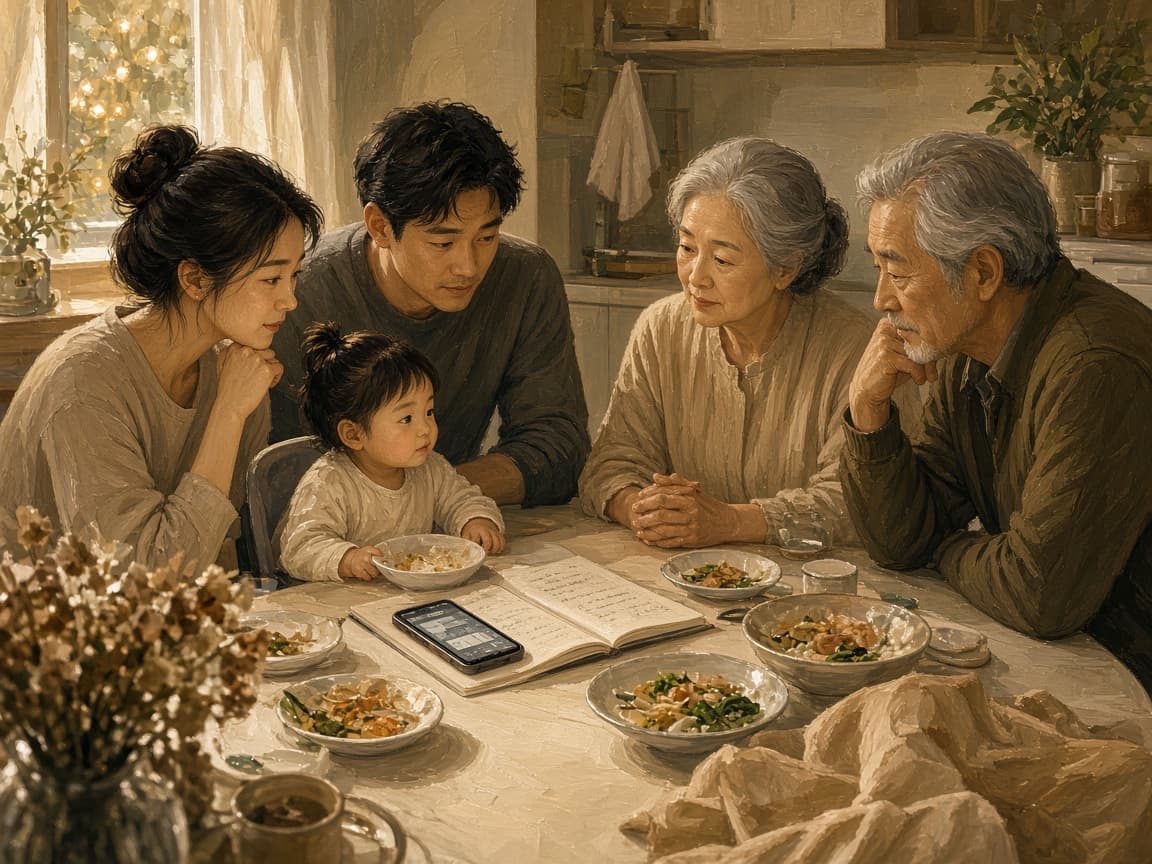
Someone will say it between the leftovers and the pie. "We can take Tuesdays after the new year."
The offer is usually love. Left vague, it becomes a standing shift nobody priced, scheduled, or agreed to end.
AARP Research published Powering Families in June 2026 after surveying 3,283 U.S. grandparents. The numbers still matter at Thanksgiving: they describe what happens when grandparents quietly become the childcare plan.
Sixty-nine percent provide some care. Among those who do, the average is more than 500 hours a year, about 10 hours a week.
Fifteen percent are there daily or almost every day. Nine in ten spend money on grandchildren, averaging $2,654 a year across all of them.
Fourteen percent said that spending came with financial strain. Seventy percent said it did not. Your table may hold both kinds of grandparents.
Holiday goodwill is a bad place to invent a childcare system. Name the hours, the money, the rules, the travel, and the exit before January needs them.
Hours first
Start with the ordinary week, not the emergency.
Write down the days, the end time, who drives, and who texts if a meeting runs late.
"Whenever you need me" is how two hours become four weekdays. Name the days you actually mean.
Then name the exceptions you can already see: school holidays, their doctor's appointments, the week another grandchild is also in town.
AARP's average for grandparents who help is about 10 hours a week. Fifteen percent are closer to a daily shift.
Ask which of those you are proposing. A standing Tuesday and a full workweek are different gifts.
Build in the backup in the same conversation. If she wakes up sick, who has the child, and by what time will someone say so.
Money, without the guilt fog
Most of these hours are offered as love. Some of them still need a number.
Ask whether the help is a gift, a paid shift, or a mix. If you pay, write the amount, the day it lands, and what it covers. Birthday money and wage money should not share an envelope.
AARP found nine in ten grandparents already spend on grandchildren: clothing, food, school supplies, camps, travel. Fourteen percent said the spending pinched.
If they are covering groceries for your child, a camp deposit, or a tuition slice, put that next to the hours. Invisible cash still shows up when her retirement budget thins.
Gas, parking, and MetroCards count. So does the week she cannot take her own work because she is with your kid.
Discipline and the kitchen
Your child will ask grandma for the yes you already refused. Give her one sentence she can repeat when you are not in the room.
No hitting. No new punishment invented in the moment. And text us if the shoes will not go on.
If she raised you under a different rule, say that once. "You did what you knew. We need this part done our way."
Then stop. Another paragraph and you are re-litigating childhood while the toddler waits.
Food needs three lines: the allergy, the choke risks at this age, and what you have decided about sweets. Tape the pediatrician's list where she actually cooks.
Screens need their own sentence before the first Tuesday. A crying child and a nearby tablet is an easy wrong answer.
Travel, and the right to say no
Out-of-town grandparents often turn a visit into care. Ask whether the trip is a visit, a childcare week, or both.
Who buys the ticket. Who covers the days she is in your house instead of hers. What happens if a flight cancels and your office still expects you at 9.
Write the exit into the plan too. Either of you should be able to pause.
"We love you watching her. If a month gets too heavy, say so by Sunday night and we will rearrange." Say it while everyone is calm, not after she has already missed three of her own appointments.
AARP found 59 percent of caregiving grandparents felt energized, 13 percent felt physically taxed, and 26 percent felt both. Joy does not cancel knees.
If the holiday table offers free daycare, answer with thanks and a draft: hours, money, rules, travel, and the exit. Then pass the pie.