
The Daycare Closes Before the Shift Does
A Robin Hood and New America survey of 4,306 New York City parents found 40 percent using care on evenings, nights, or weekends, and 39 percent saying they have less care than they need. Irregular schedules and poverty tracked with the biggest gaps.
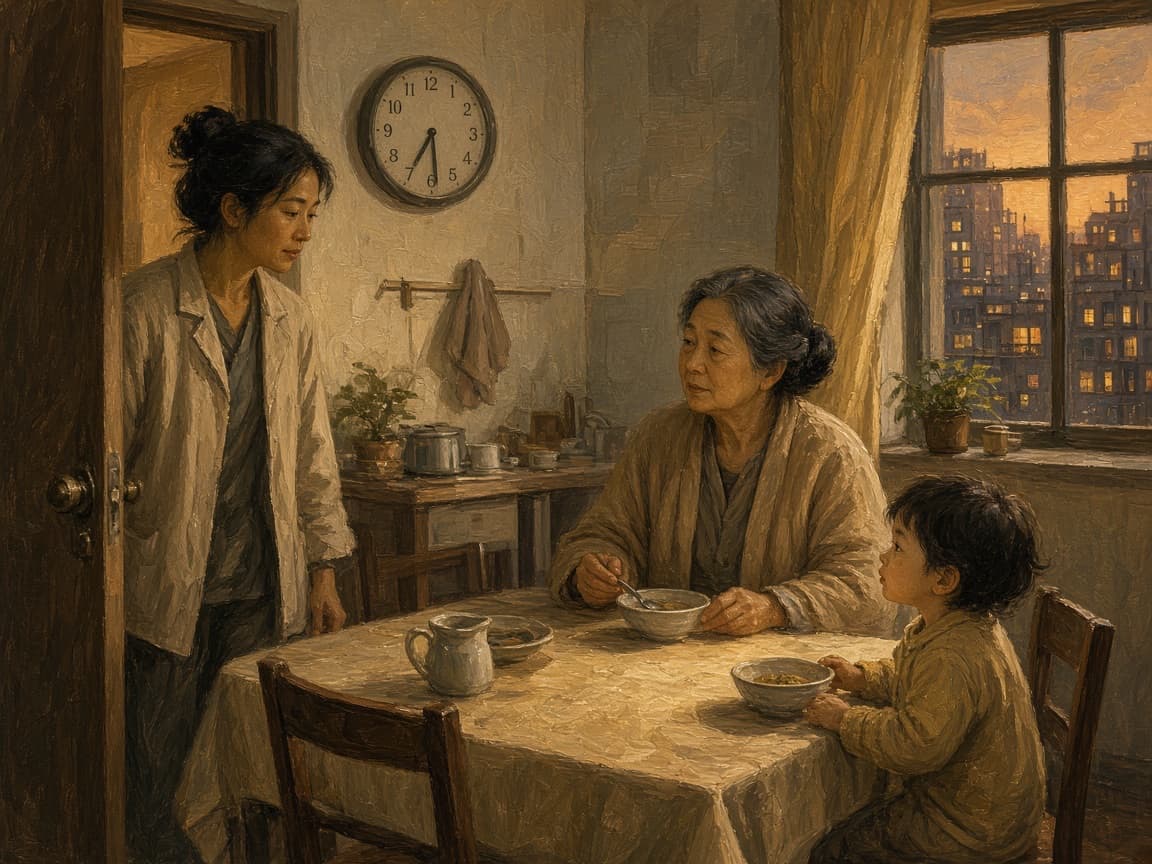
A Brooklyn parent of a one-year-old wrote it straight into the survey box.
Hospital shifts run Sunday through Thursday. Daycares do not open on Sundays. Vacation days were filling the hole.
A lot of New York parents already live that gap. On October 8, Robin Hood and New America's New Practice Lab published numbers for the whole city.
They surveyed 4,306 parents and caregivers of children under six, with NORC, from late March into mid-April. The Mayor's Office of Child Care and Early Childhood Education partnered on the design.
Forty percent said they were already using care on weekday evenings or nights, or on weekends.
Among parents using someone besides a parent for care, 28 percent regularly needed Saturday. One in three needed Sunday.
Most of the licensed day still looks like a weekday office clock. Nearly four in ten parents, 39 percent, said they have less child care than they need.
Forty-seven percent said they do not have the type of care they most want for their child's age right now.
A free seat still leaves a parent stuck if class ends at 2 or 3 and the job runs to 7, overnight, or Sunday. This survey puts borough- and schedule-level numbers on that gap.
Evenings, Sundays, and the 8-to-3 day
For parents using nonparental care on weekdays, the most common window still looks like a long center day, roughly 8 a.m. to 6 p.m.
Close behind is a school-day schedule, about 8 to 3, used by roughly a quarter to nearly a third of those parents depending on the day.
A preschool day can end while a full-time shift, overtime, or a second job is still going.
A Queens mom of a four-year-old asked for something closer to 7 a.m. to 7 p.m., year-round.
Most programs she saw ran 8 to 2 in the school year. Backup care and missed work filled the rest.
Evening care showed up for 5 to 6 percent of weekday users. Overnight care for 2 to 3 percent.
Citywide, though, 40 percent of parents already need some mix of evenings, nights, or weekends. When they do, they lean harder on relatives, nannies, friends, and neighbors than on centers.
Who is short on hours
The shortfalls pile up differently depending on the borough and the paycheck.
Parents with irregular work schedules and parents below the federal poverty line reported some of the highest gaps.
Roughly half of parents who primarily speak Spanish at home said they needed more care. Black, Hispanic, and AAPI parents also reported higher unmet need than the city average. Women were at 46 percent, compared with 30 percent of men.
Relative care is already covering a lot of the after-hours work. It is the most common nonparental arrangement citywide.
Use runs especially high in the Bronx and on Staten Island. Center use runs higher in Brooklyn and among higher-income parents.
About one in ten parents regularly combines two or more setups.
Among those free-response answers, nearly a third stitched a school program to separate after-school coverage. Others switched between formal and informal days, or kept a grandparent in the mix.
From East New York to Bushwick
The survey also asked what parents most want by age, then estimated demand by school district. That matters for where new 2-K and 3-K seats land, and for whether those seats come with hours that match real jobs.
At age two, the share preferring any formal setting (center, school, or licensed home) ranged from about one-third of parents in East New York's District 19 to 69 percent in Bushwick's District 32.
Preference for center or school care alone swung from 18 percent in the Bronx's District 10 (Fordham, Riverdale) to 52 percent in Brooklyn's District 14 (Williamsburg, Greenpoint).
Higher shares wanting formal seats clustered in generally higher-income parts of Manhattan and Brooklyn. Lower shares showed up more often in parts of the Bronx and Southeast Queens.
Interest in free 2-K will not land the same way in every district. Evening and weekend coverage is a separate shortage on top of that.
Parents ranked cost as the change that would help most. Flexible and extended hours came next.
If the city builds more seats on a school-day clock, the Sunday hospital shift and the 7 p.m. close will still be someone else's problem.