
Very Young Children Are Now Their Parents’ Tech Support
Lingokids reports that more than half of parents of kids ages two to eight have asked those children for tech help, and most say the kids delivered. The useful question is whether interface fluency is being mistaken for digital judgment.
It starts as a small hand on a bigger phone. The Wi-Fi icon is wrong. The video will not rotate. The grocery app wants a password the adult typed yesterday and cannot find today.
A toddler or early-elementary kid taps once, twice, and the problem dissolves. The parent laughs. The child beams. Someone in the group chat will call it proof that kids are “digital natives.”
Lingokids’ August 5, 2026 press findings, drawn from its Kids Interactive Entertainment Report, put numbers under that kitchen-table scene.
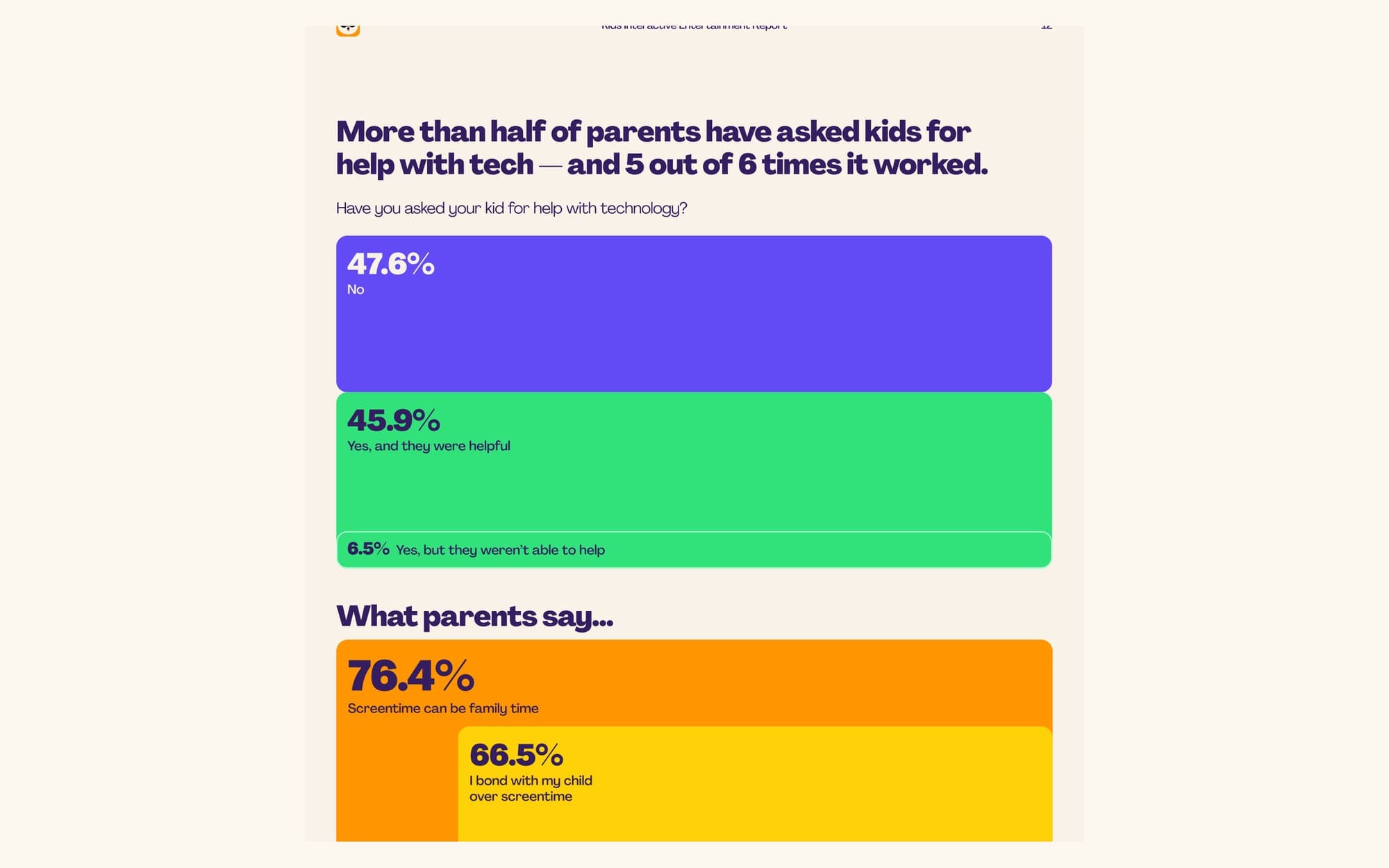
More than half of surveyed parents of children ages two to eight said they have asked their child for help with technology.
About 45.9% said yes, and the child was helpful. Another 6.5% asked and did not get help. Roughly 47.6% said they had not asked.
Among parents who did ask, about five in six said the help worked.
The argument worth making with that data is quieter than the “digital native” joke. Interface fluency is arriving earlier than many adults expected. Digital judgment is a different skill, and it does not automatically ride along with a confident thumb.
Early tech help from young children is increasingly common. Parents who can tell fluency from judgment get to keep the help without handing over the decisions that still need an adult.
What the numbers actually measure
Lingokids is an interactive kids’ platform, and the report is partly a portrait of Gen Alpha screentime habits. Treat the tech-help finding as parent-reported household behavior, not a clinical test of digital competence.
Still, the shape of the answers matters. Asking a two-to-eight-year-old for tech help is no longer rare enough to be a cute exception.
More than half of the parents in the press tally have done it. When they did, most said the child could help.
That lines up with another report beat: young kids already spend about as much time on online games as older children do, around seventy minutes a day in the comparisons Lingokids highlights. Comfort with devices and apps is arriving before the tween years adults still picture as the start of tech independence.
What the survey does not measure is whether the child understood privacy settings, advertising, or why a download was a bad idea. Fluency and judgment share a living room. They are not the same assignment.
Fluency is real. Judgment is slower.
A child who can reopen a frozen app has practiced a motor and visual language: icons, gestures, recovery paths. That practice can be genuine skill.
Judgment asks different questions. Is this an ad? Who can see this photo? What stays online after we delete it? Why does this video keep autoplaying?
Pediatric guidance has been moving toward that distinction. The American Academy of Pediatrics’ 2026 digital-ecosystems policy urges families to foster digital literacy and ongoing conversation, not only to count minutes. Its examples include recognizing ads, private versus shareable information, and the permanence of online content.
In early childhood especially, AAP materials still stress that high-quality use often works best with a caregiver nearby. A preschooler who can swipe your phone awake is not automatically ready to be the household’s privacy officer.
So when a four-year-old saves the day on FaceTime, celebrate the save. Then keep the adult brain on the decisions that are not about which icon to tap.
How diaspora households can use the help without flipping the hierarchy
Many Asian and multicultural families already live with a familiar reverse: kids translate forms, school portals, and English-heavy apps for elders. Device troubleshooting can feel like one more translation job.
That help can be proud and useful. It can also quietly assign a child adult responsibility they did not choose.
A kinder frame is apprenticeship, not outsourcing. Let the child show you the tap. Narrate what you are checking next: the account name, the purchase confirm, the reason you are not installing that third-party keyboard.
If grandparents are in the mix, keep one adult as the final yes on downloads, payments, and what gets shared into the family chat. Kids can be brilliant guides through a settings maze and still need a grown-up at the gate.
A practical way to answer the Lingokids finding at home
When your child helps, name the skill out loud. “You knew how to rotate the screen.” Specific praise builds confidence without crowning them Chief Technology Officer.
Keep a short list of adult-only moves: app installs, password changes, in-app purchases, location sharing, posting photos of siblings or classmates.
Borrow Lingokids CEO Cristóbal Viedma’s warmer invitation without swallowing it whole. Household troubleshooting can be bonding. Bonding still needs an adult who can say no when a helpful tap turns into a risky one.
If screentime guilt is already loud in your house, pair this with evidence rather than vibes. Our guide on what screen-time guilt research actually says sits beside this brief for a reason.
The walkaway is simple. Let kids be fluent. Stay in charge of judgment.
Further reading
- Apple’s New Child-Safety Tools Give Parents More Control Over Contacts and Content
- Screen-Time Guilt: What the Evidence Actually Says
- The First Year With Baby When Family Is Far Away
- Both Parents Work but Relatives Judge Daycare Over Grandma Care
- Phone Secrecy in Marriage (Passwords, Notifications, and When Privacy Becomes Hiding)