
When Parents Restrict Screens, What Actually Moves
An October 28 ABCD analysis of 8,089 adolescents found high and moderate digital parenting restrictions linked to less self-reported and passively measured screen use. The high-restriction link on total screen time faded with age. The study is observational.
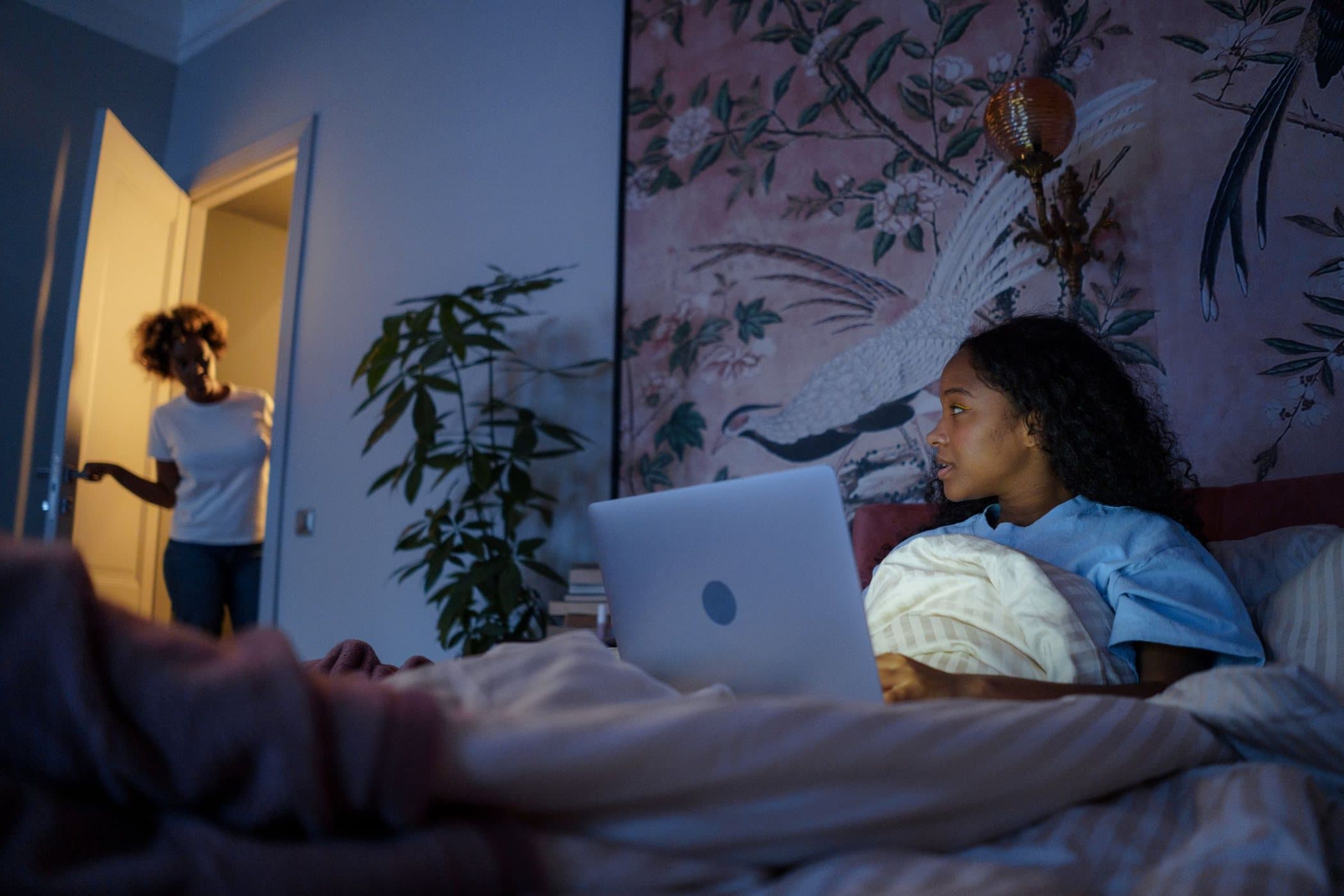
The rule sheet on the fridge is clear. The phone still ends up under the pillow.
On October 28, Daniel Lopez and colleagues at Oregon Health & Science University published a look at what those rules track with in real use. They used Years 3 through 5 of the Adolescent Brain Cognitive Development Study, 8,089 adolescents whose parents answered the same screen questionnaire across three annual visits.
The kids were about 13 on average in the included sample. Parents got sorted into Low, Moderate, or High Restriction profiles from 14 items on the Parent Screen Time Questionnaire.
High and Moderate Restriction lined up with less screen use on every measure the team ran: youth self-report, youth smartphone report, passive Android phone time from the ABCD-EARS app, and daily keystrokes on Android and iPhone.
Stricter digital rules tracked with lower use on phones that report themselves and phones that do not. The gap on total screen time still narrowed as kids got older.
High, moderate, and low
Compared with the Low Restriction group, kids in the High Restriction profile reported about 56 fewer minutes of total screen time a day. Their self-reported smartphone time ran about 43.5 minutes lower.
On phones that logged themselves, the High group averaged 79.3 fewer minutes a day of Android screen-on time. They also typed less: 286 fewer keystrokes a day across Android and iOS.
Moderate Restriction sat in between on most outcomes. Total self-reported screen time was about 11.5 minutes lower than Low. Self-reported smartphone time was about 15 minutes lower.
Passive Android time was about 29 minutes lower. The keystroke drop for Moderate did not hold after the paper's correction for multiple tests.
None of that proves the rules caused the quieter phones. Families who already have lighter use may keep tighter rules, or the reverse. The authors say so.
What changed with age
Over the three years, fewer families stayed in the High Restriction profile.
High fell from about 47 percent in Year 3 to about 25 percent in Year 5. Low rose from about 14 percent to about 36 percent. Parents tended to loosen, not tighten.
On total self-reported screen time, the High Restriction advantage shrank as age went up. Kids in that profile increased their reported minutes faster than the Low group, by about 13 minutes a day per year of age in the interaction model.
That age fade showed up clearly on the broad self-report. It did not show the same way on passive Android minutes or on keystrokes after the paper's corrections.
In older kids, the same high-restriction house lined up with a smaller gap on total reported screen time.
The bedroom kept ranking first
When the team asked a machine-learning model which Parent Screen Time Questionnaire items mattered most for self-reported screen time, bedroom access rose to the top.
A screen playing in the room as the child fell asleep ranked highest. Falling asleep while using a screen came next.
A mobile device in bed also ranked. Weekend limits mattered too.
The model only explained about 10 percent of the variance. It ranks what tracked inside this questionnaire. It does not pick your next rule for you.
Still, the bedroom pattern matches what a lot of houses already fight about after lights-out.
What this study cannot settle
This is observational work on one large U.S. cohort. It followed kids who made all three visits.
The included sample leaned higher income and more educated than the kids who dropped a wave.
Passive minutes came from Android phones only, in a smaller subset. Keystrokes covered more devices, including iPhones, and still left many teens out.
Some of the years overlap the pandemic, when screens and household rules both moved.
Lopez and coauthors also warn that the arrow can run both ways. A quieter screen week can invite looser rules. A louder one can invite a crackdown.
If you are rewriting the house rules, start with the hour you can still see: the phone in bed, the screen still on when sleep starts. Then watch whether the week actually changes.