
In San Jose Tonight, a Thanksgiving Dinner on Loving LGBTQ Kids
South Bay Queer & Asian’s Nov. 21 dinner put an AAPI panel on loving LGBTQ children next to turkey and chosen family. Organizers and parents keep pointing to the same holiday tests: the guest list, the partner introduction, and who answers when a relative turns sharp.
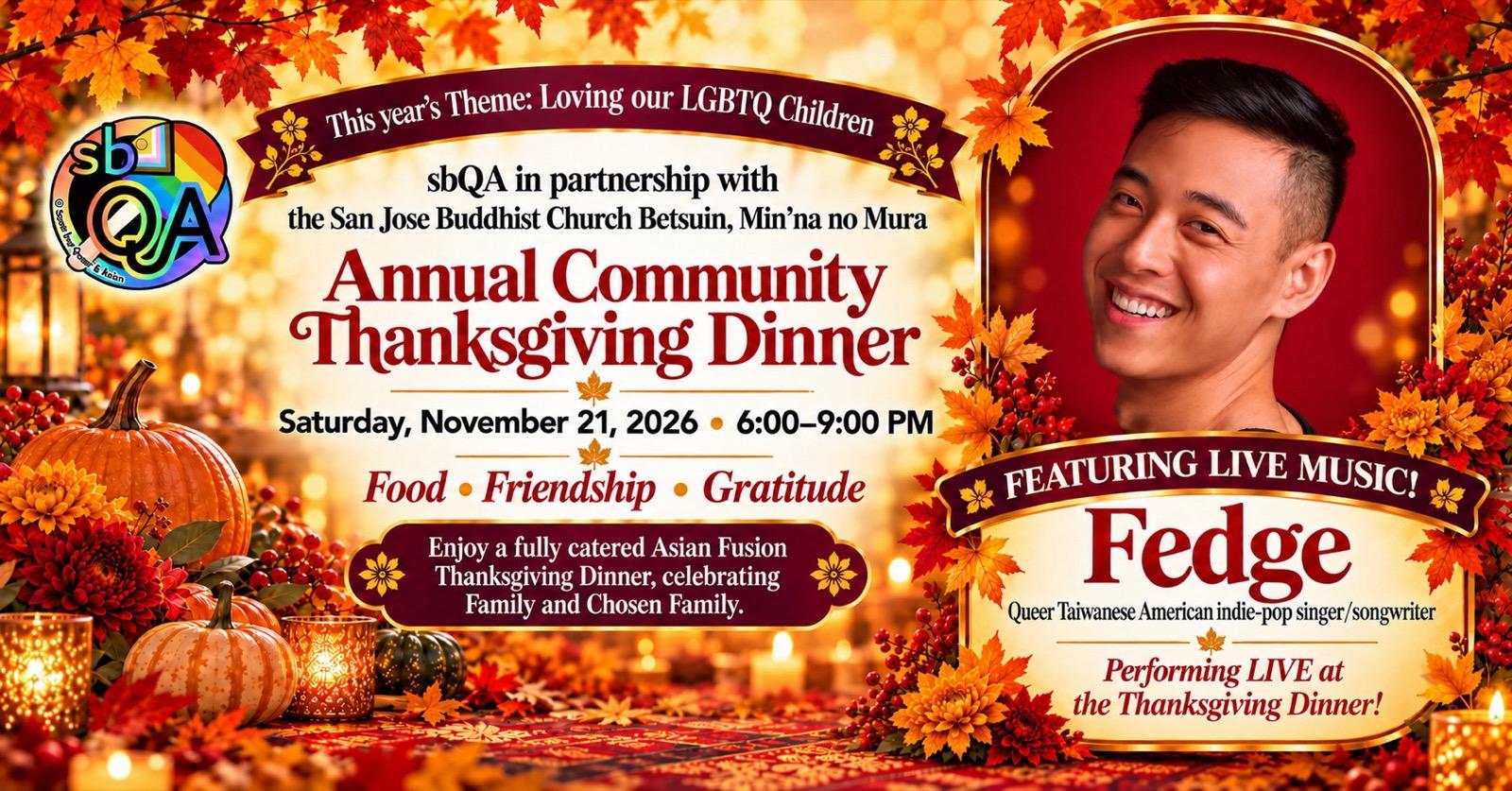
Tonight in San Jose, South Bay Queer & Asian hosts its Annual Community Thanksgiving Dinner at San Jose Buddhist Church Betsuin. Doors opened at 6 p.m.
The meal is catered Asian-fusion turkey with East and Southeast Asian dishes. The theme on the flyer is plain: Loving Our LGBTQ Children.
Organizers call the evening family and chosen family. That pairing matters for any household still deciding who sits where this week.
The dinner goes back to 1992. The keynote changes. This year’s panel comes from an AAPI angle on how parents love and support LGBTQ kids.
You can borrow the question without being in the room. Start with the small holiday choices that show a child what support looks like.
Support shows up in tiny holiday choices: who gets a seat, how a partner is named, and which adult answers a hurtful line. A speech after dessert cannot cover for those.
What organizers say support has always meant
sbQA began as a South Bay support space for queer Asians dealing with family, money, immigration, and mental health. Queer Silicon Valley’s oral history puts the first meeting on Feb. 19, 1992.
Thanksgiving joined Lunar New Year and a winter holiday gathering as one of the group’s yearly tables. The Eventbrite page still calls tonight food, friendship, and gratitude.
Dr. Kyle Matsumoto Burch opens the theme at 6:30. In a 2020 conversation with Queer Silicon Valley, then interim president Kyle Matsumoto-Burch described people who take years to walk into a Billy DeFrank meeting.
Some stay outside until they have the confidence to go in.
That patience is how organizers talk about support. It works at a holiday table too. Nobody can force a relative through the door. You can still make the room less punishing when they finally sit down.
What parents say kids actually need to hear
AAPI parent advocates have repeated a hard lesson in different rooms for years. Quiet love, with no words, often falls short.
In 2016, NQAPIA director Glenn Magapanty told NBC News that knowing a child is LGBTQ is a first step, and that parents still need a deeper acceptance and understanding. The campaign’s bilingual PSAs and leaflets were built for immigrant parents who rarely see their languages in mainstream LGBTQ materials.
Marsha Aizumi, co-founder of PFLAG’s first API chapter, has written about parents who love their children and still forget to say they are proud. In a Pacific Citizen column, she recounts a daughter who needed to hear that different was wonderful, not only that she was accepted.
Family Acceptance Project posters in Chinese, Korean, Japanese, Vietnamese, Tagalog, Hindi, and Punjabi give caregivers concrete accepting and rejecting behaviors. Aizumi called those tools words API families often do not have ready.
Tonight’s panel sits in that lineage. The flyer puts an old idea next to turkey and chosen family.
Who gets invited, and how a partner is named
Before the first casserole arrives, someone decides the guest list. That choice already tells a child something.
If your adult child asked to bring a partner, say the partner’s name when you send the group text. Practice the introduction out loud once. "This is Jordan, Mai’s partner" lands cleaner than a vague "friend from school" that forces everyone to guess.
If a grandparent is not ready for the full story, still protect the seat. A smaller early dinner with supportive relatives can be the real Thanksgiving, with a shorter courtesy visit later.
Organizers keep saying family and chosen family for a reason. Both can feed people.
sbQA’s own history includes parents who softened after meeting other queer Asians in person and learning that grandchildren were still possible. Showing up changed more than a lecture would have.
Who speaks when a relative gets hurtful
Agree the plan before anyone uncorks the wine. The LGBTQ person at the table should not have to be the only one who answers.
A short script helps. "We do not talk about Mai that way in this house." Or: "If you have a question, ask me later. Not at dinner." Then change the subject to the rice or the drive home.
If you freeze, repair afterward. Tell your child what you meant to say. Ask what would help next time.
Magapanty’s point about moving from awareness to acceptance shows up here. The second conversation is part of the love.
Chosen-family friends can be the backup table. Text them before the gathering if you expect static. Knowing there is another couch for pie changes how brave a hard room feels.
A small question for this week’s table
Ask one thing before Thursday or before tonight’s leftovers: "What would make you feel safer at dinner this year?"
Listen for invites, names, pronouns, seating, or a pre-agreed exit. Do not argue them into shrinking the ask.
If you are the parent driving to Betsuin tonight, or the aunt hosting Sunday, write one concrete move on a sticky note. Invite the partner by name. Sit beside your kid.
Be the adult who speaks first.
In this community’s telling, support looks like a chair pulled out, a name said clearly, and a relative who does not leave the queer person alone with the sharp comment.