
TikTok Shop Was Selling Crib Bumpers That Are Federally Banned
CPSC says Budget Baby Boost bumpers sold on TikTok Shop violate the Safe Sleep for Babies Act, and the seller has not offered a recall remedy. The larger lesson for parents: a ban can leave products still purchasable, or already in the crib.
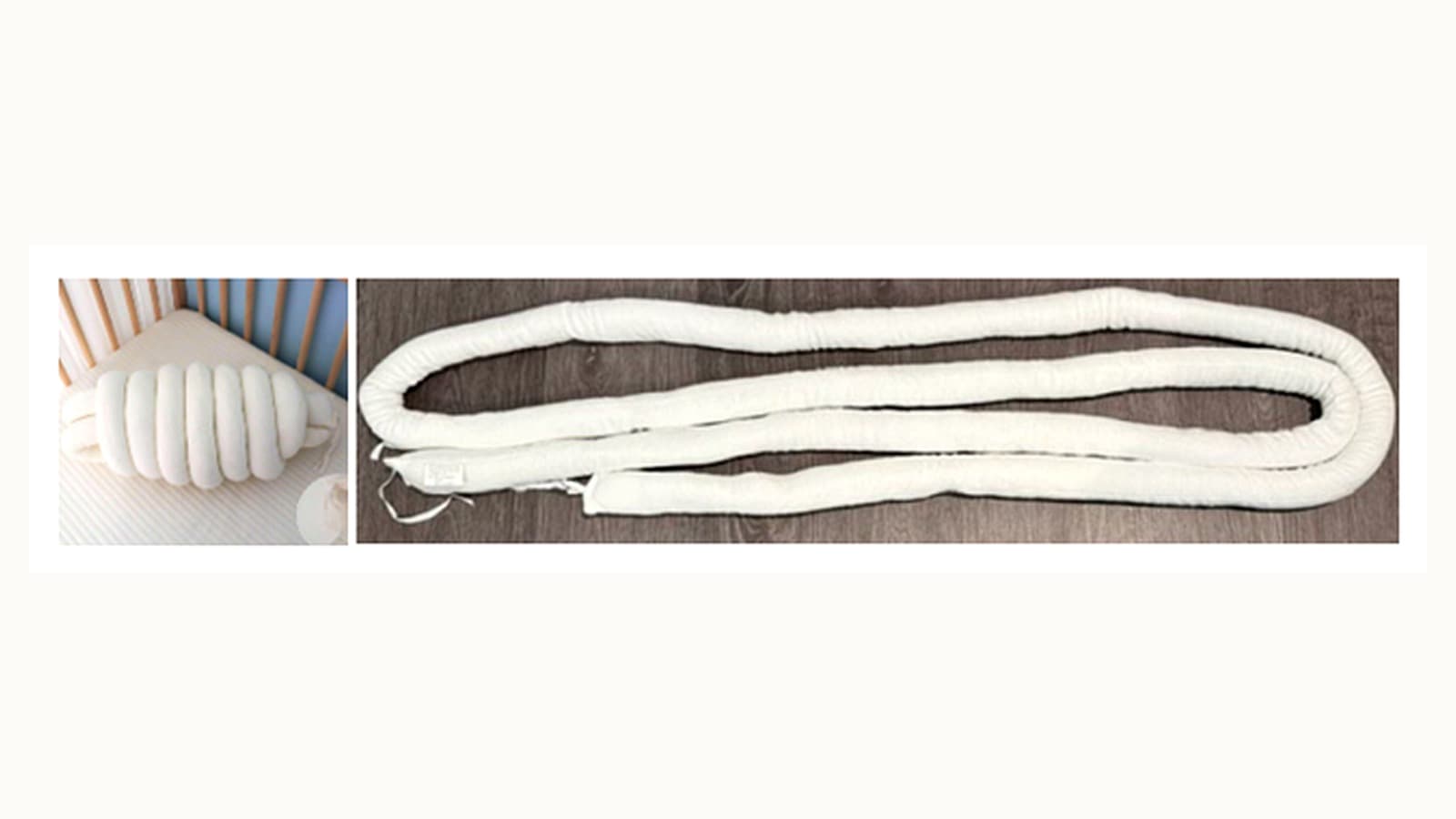
Nursery shopping often starts with a picture, not a statute. Soft padded rails and round bumpers make a crib look finished. They photograph well. They also promise to keep tiny limbs from the slats, which is why so many grandparents still ask why the crib looks “empty.”
Federal law already answered that question. The Safe Sleep for Babies Act treats padded crib bumpers as banned hazardous products. Selling, offering, importing, or distributing them in the United States has been unlawful since November 12, 2022, no matter when the bumper was made.
Yet on August 6, 2026, the U.S. Consumer Product Safety Commission warned families to stop using Budget Baby Boost crib bumpers sold on TikTok Shop. About 141 units moved through shop.tiktok.com from March through July 2026 for about $16, in blue, gray, pink, and white.
The argument we want to make is practical. A ban can make a category illegal and still leave products purchasable, giftable, or already tied to the crib. Parents need a way to spot those leftovers, not only a headline about one listing.
CPSC also says the China-based retailer has been unresponsive to a recall or consumer remedy. That gap is part of the story.
A federal ban protects families only when someone in the household can still recognize a banned product in a shopping cart, a gift bag, or a crib that already looks ‘done.’
What the ban already covers (and what it does not)
Under the Safe Sleep for Babies Act, “crib bumper” is a legal category, not a brand name.
CPSC’s business guidance says it includes padded crib bumpers, supported and unsupported vinyl bumper guards, and vertical crib slat covers. The point of those products, in the statute’s language, is covering crib sides to prevent impact injuries or to block openings where a body part could trap.
One important carve-out: a non-padded mesh crib liner is not treated as a banned crib bumper under that definition. Soft, stuffed, braided, or vinyl-padded products that do the bumper job usually are.
The same 2021 law also bans inclined sleepers for infants. That second category shows up in marketplace warnings too, which is why “cute sleepers” and “cozy bumpers” belong in the same household checklist.
Knowing the category matters more than memorizing one seller name. Listings rename themselves faster than family group chats update.
Why illegal sleep gear still shows up in the cart
Budget Baby Boost is not a one-off curiosity. Through 2025 and 2026, CPSC has posted a string of crib-bumper warnings and recalls tied to online sellers, including other TikTok Shop listings, Amazon storefronts, and marketplace sites such as SHEIN and DHGate.
A recurring detail in those notices is an overseas seller that does not agree to a recall or a consumer remedy. When that happens, CPSC still warns the public. The agency cannot make a silent storefront write refund checks.
That is the practical gap parents feel. TikTok Shop, Amazon, and similar rails can move a $16 nursery “upgrade” into a U.S. home before a violation notice appears.
Relatives shopping from abroad, or buying from a viral video, may never see the CPSC page.
For diaspora households, the pressure can be social as well as aesthetic. An aunt may send bumpers because empty cribs looked harsh in her generation.
A ban does not rewrite that memory. A clear explanation might.
A kitchen-table filter before you buy soft sleep gear
Start with the sleep surface, not the décor. CPSC’s reminder in this warning matches standard safe-sleep guidance: a firm, flat crib, bassinet, or play yard; a fitted sheet only; baby on the back; nothing else in the sleep space.
Then interrogate the listing. Does the product cover crib sides, fill slat gaps, or add padding around the infant’s head?
Does the marketing promise to “protect from bumps” or “close the gaps”? Those are bumper jobs, even when the title says pillow, braid, nest, or bumper alternative.
Search the exact brand and model on CPSC.gov and SaferProducts.gov before the package ships, and again when it arrives. Screenshot the order page. Keep the seller name.
Prefer retailers and brands that publish U.S. contact details and return paths you can actually use. A beautiful nursery still photo is not a certificate of compliance.
If elders want the crib to look softer, translate the law kindly: mesh liners that are non-padded may be treated differently under the bumper definition, but pillows, quilts, stuffed rails, and loose bedding still do not belong in an infant sleep space.
If the bumpers are already on the crib
CPSC’s consumer action for Budget Baby Boost is direct. Stop using the bumpers immediately. Dispose of them. Do not sell them, gift them, or pass them to a cousin’s registry.
There is no recall remedy announced from this seller. That means you should not wait for a prepaid label that may never come. Remove the product, then decide whether a marketplace return window is still open for your own refund path.
Report injuries or suspected defects at SaferProducts.gov. Reports help the agency see patterns across tiny unit counts that look small in isolation.
If a relative bought the bumpers as a gift, lead with gratitude and the federal ban, not blame. “These are illegal to sell now because babies can suffocate against the padding” is clearer than a lecture about taste.
The walkaway: treat bans as homework, not background noise
The useful story is not that one TikTok Shop seller broke a rule. It is that banned categories can still reach a crib through social commerce, thin seller identities, and the time lag between a listing and a public warning.
So keep a short habit. Before soft sleep products enter the house, ask whether the category is banned, whether the listing matches a bumper’s job, and whether CPSC already named the brand.
After they arrive, check again. Empty cribs look unfinished in photos. They are often the safer room in real life.
Further reading
- That Viral Squishy Toy May Be Counterfeit, and the CPSC Says Some Pose Serious Burn Hazards
- The Best Parenting Product Is Often the One That Survives Ordinary Life
- The First Year With Baby When Family Is Far Away
- Both Parents Work but Relatives Judge Daycare Over Grandma Care
- Childcare Costs, Grandparent Help, and the Real Price