
Why Diaspora Parents Are Reconsidering Weekend Language School
Fall registration is here, weekday Chinese immersion is at a U.S. record, and a 2026 study of community Mandarin schools found they help reading more than speaking. The useful question is what Saturday class is for in your house.
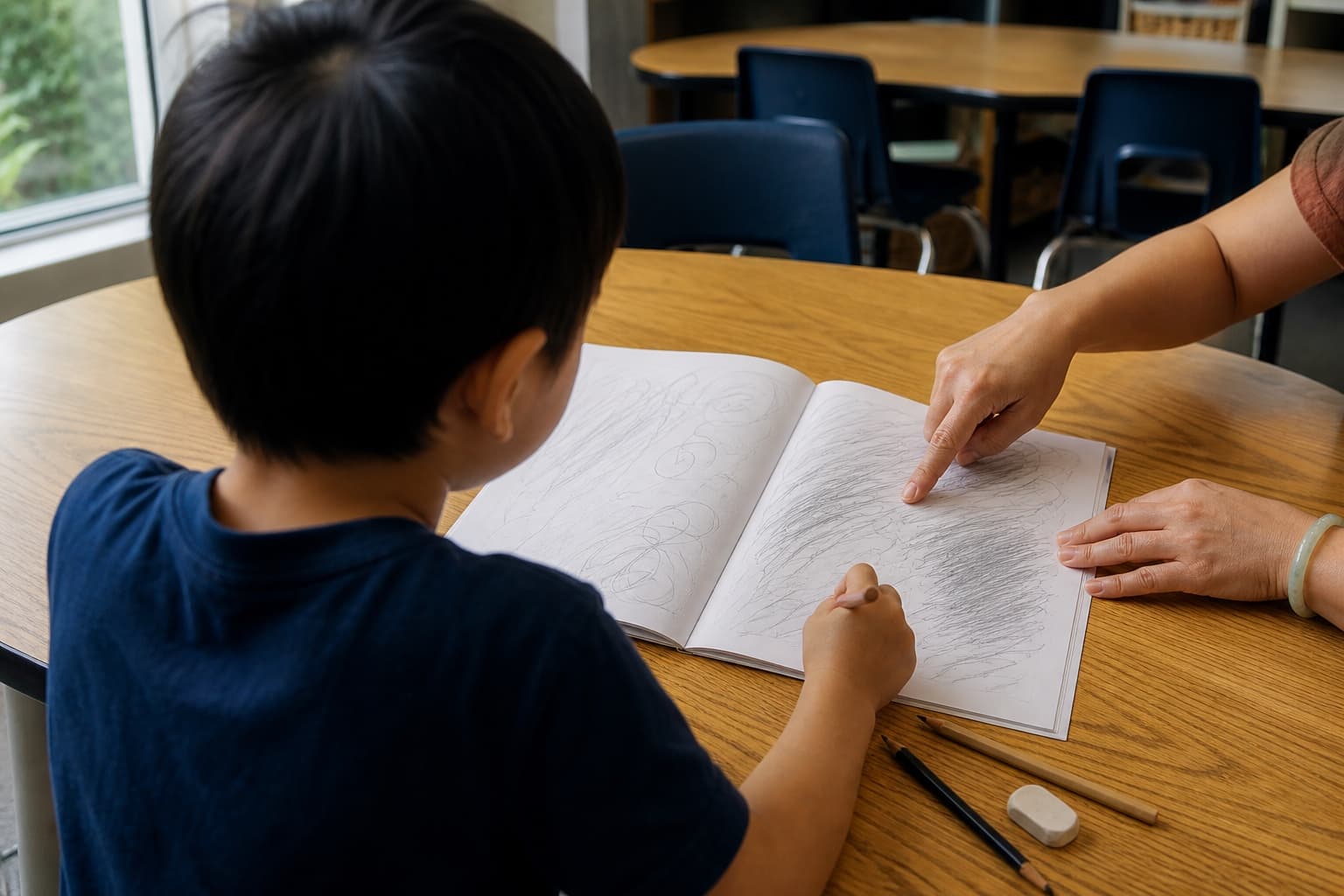
For a long time, Saturday morning was the deal.
If you wanted a child to keep Mandarin, Korean, Tamil, or Cantonese, you packed the workbook, gave up the soccer slot, and told yourself the fight in the car was the price of not raising a tourist in your own family.
Two things are unsettling that deal as fall registration closes. The first is supply. On August 15, the South China Morning Post reported that K-12 Chinese immersion programs in the United States hit a record 397 campuses, according to Elizabeth Weise, who has tracked those programs for immersion parents for years.
At Goodtime Chinese School outside Portland, more than half of this year's 100 kindergarteners have no Chinese heritage, and full-time tuition runs about $14,000 a year.
The second is evidence. A study published in March found that community weekend schools move a child's reading and writing much more than their speaking.
Most families are not choosing between a $14,000 campus and nothing. They are filling out 2026-27 forms for the same three-hour Sunday program the community has always run.
So the real registration question is which outcome you are paying for, and whether Saturday is the thing that delivers it.
Weekend school is good at literacy, peers, and a place to belong. It is a weak substitute for the conversations you actually want your child to have with elders, and it was never the only proof that you kept the culture.
What weekend school is designed to do
Community heritage schools (also called complementary schools, or just Chinese school, Korean school, Saturday school) exist because weekday public school was never going to do this job.
They usually run two to four hours on a weekend, staffed by parent volunteers or community teachers, and they carry two assignments at once. One is the language. The other is a room where your kid is not the only one who knows Lunar New Year without a slideshow.
What parents are buying is usually more specific than "fluency." It might be characters, or a greeting that lands with Gong Gong, or a temple community, or proof for the relatives that immigration did not cut the thread.
Qin Xiang, who wrote her doctoral thesis on Mandarin heritage language at the University of Saskatchewan, has made the case that these schools matter for literacy while the heavier lift stays at home: whether the adults keep using the language, and whether kids have anywhere to use it back.
That second part is what no tuition line covers.
What kids actually resist
In Makarova and Xiang's interviews, the children who liked school talked about friends, about Mandarin being useful later, about someday visiting family. The ones who did not talked about homework, long classes, and feeling like the worst reader in the room.
That split is ordinary. A tired eight-year-old who complains about extra school is not filing a formal rejection of her grandparents.
Some complaints belong in a different category. A classroom that mocks accents, ranks cousins against each other, or runs on public correction is a real problem, and so is a kid with Saturday stomachaches or a bullying story you have not heard yet.
Ask like you are gathering facts rather than building a case. "Is it the drive, the teacher, the other kids, the homework, or the soccer you keep missing?"
Write down what they say. Try not to fix it in the car.
Four outcomes, and the tools that fit them
At least four different things get called "keeping the language," and they do not answer to the same tool.
If you want conversation with elders, weekend class is a weak primary engine. In the Saskatchewan data, speaking tracked home use rather than attendance.
If you want reading and writing, the same study is more encouraging. Kids who attended could identify and write more characters than kids who never went, which is precisely what a literacy-first curriculum is built to do.
If you want belonging, take the children in that study at their word. Most of them liked going because their friends were there, and a kid with two friends in that classroom is getting something real even when the workbook looks rough.
Community is the outcome that survives a pause most easily. What rarely survives is a language your child has quietly filed under punishment.
None of those four answers tells you to stay or to quit. They tell you what Saturday is competing against.
What else can carry a language
Weekend school is a delivery method, not the language itself. A tutor, a summer immersion week, a public dual-language seat, an online class, or one stubborn family routine can carry the same cargo.
Weekday immersion is growing in some metros and thinning in others. Fort Bend ISD outside Houston opened applications this winter for a new elementary Mandarin track, and Redwood City expanded its Mandarin program after families pushed for it.
New America has also documented districts consolidating or closing dual-language programs as enrollment and budgets tighten. A nearby seat is not a promise, and a lottery number is not a plan.
Our guide on whether weekend heritage school is worth it lays the formats side by side with real tuition ranges. The companion guide on raising a bilingual child when you are not fluent covers the version that runs at home.
If grandparents count only classroom hours, offer them a translation. The method changed. The language did not.
A four-week check, then the conversation
Week one: write the goal in one sentence. "I want them to video-call Grandma without freezing" is a different purchase than "I want native-level reading by middle school."
Week two: sit in on a class if visitors are allowed, or look hard at the homework load. Then change exactly one logistical thing, whether that is an earlier Friday bedtime, a snack in the car, a carpool with a friend, or dropping the extra worksheets.
Week three: put twenty minutes of the language somewhere that is not Saturday. Cooking counts, so does a standing call with a relative, and the point is that class stops being the only room the language lives in.
Week four: decide together. Stay, switch programs, or pause with a written home plan and a date to look at it again.
Then have the conversation without turning heritage into a loyalty test. Something like: "I want to understand Saturday, not win it. What is the hardest part?"
Say the goal out loud too. "Here is what I hope this language does for you. If this class is not the way there, we will find another way. We are not dropping the language. We are checking the method."
If you need a boundary, put it on effort instead of identity. Four more weeks under new terms, or a home plan you can actually keep.
Some relatives will read that as going soft, and they are not the ones in the car on Saturday morning. Staying can be the right call and so can leaving; the damage comes from treating one of them as the only loyal answer.